The Dataset's Dream
What is lost and what is gained when we turn nature into data?
Pondering our relationship to nature in a highly digitised world, The Dataset’s Dream is an installation that invites visitors to consider how our relationship to nature is shaped by the act of looking at it through the lens of a camera and then translating these encounters into hard facts and figures.
Commissioned by researchers working in the world of big data and biological recording, this art-science collaboration asked: What are the longterm and real-world impacts of absences and gaps in the collected data – the moths and butterflies that are unrecorded and overlooked? And how do we reconcile the desire to advocate for the protection of native species with the “enticing futility of collecting and preserving forever the names of everything” – poet Thomas Sharp.
Poet Thomas Sharp and artist Bryony Ella spent the summer with a team of scientists who have been developing a web tool to help people identify locations in Britain most in need of new biological records. The creative response to their work was to explore their work through the lens of the dataset itself.
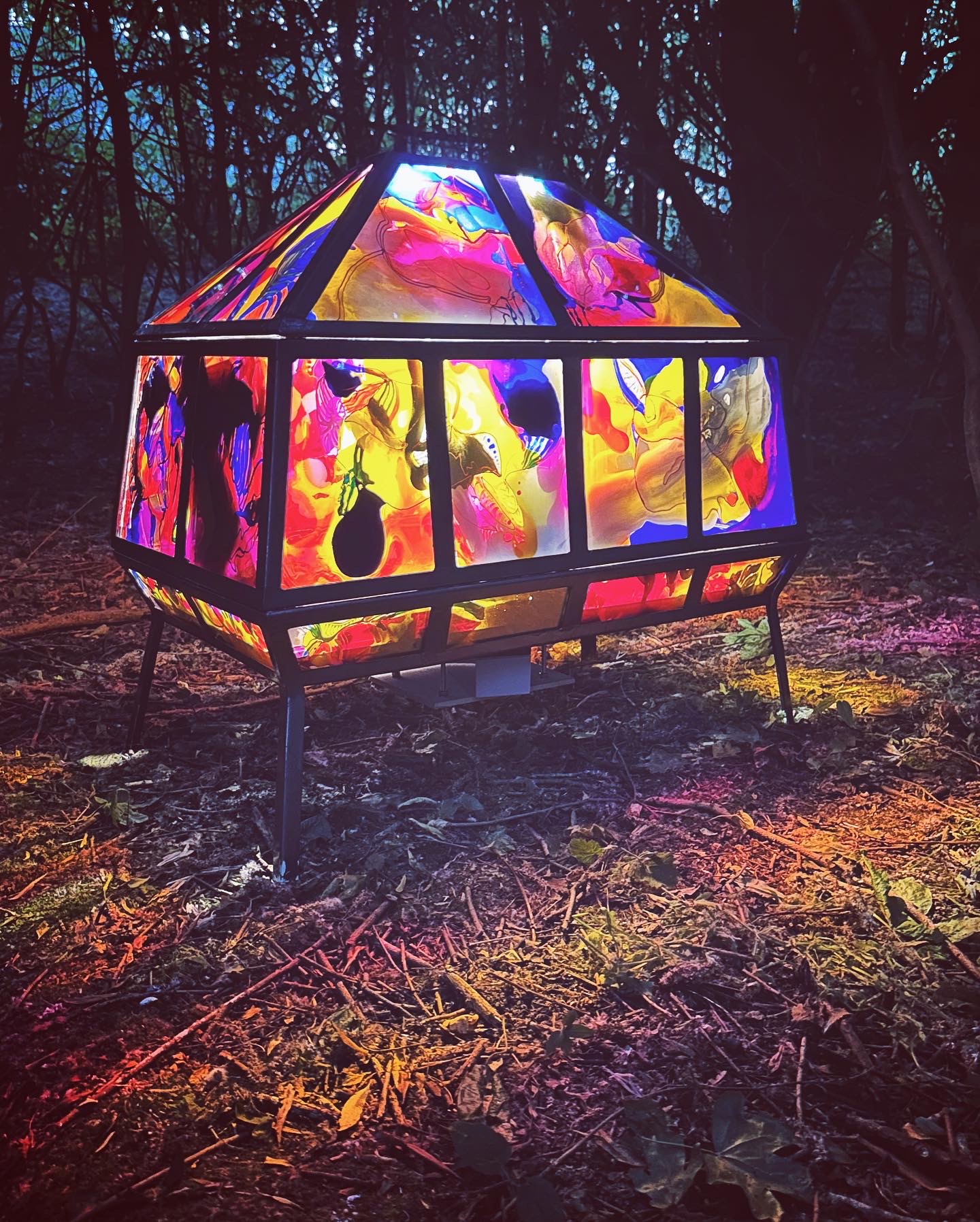
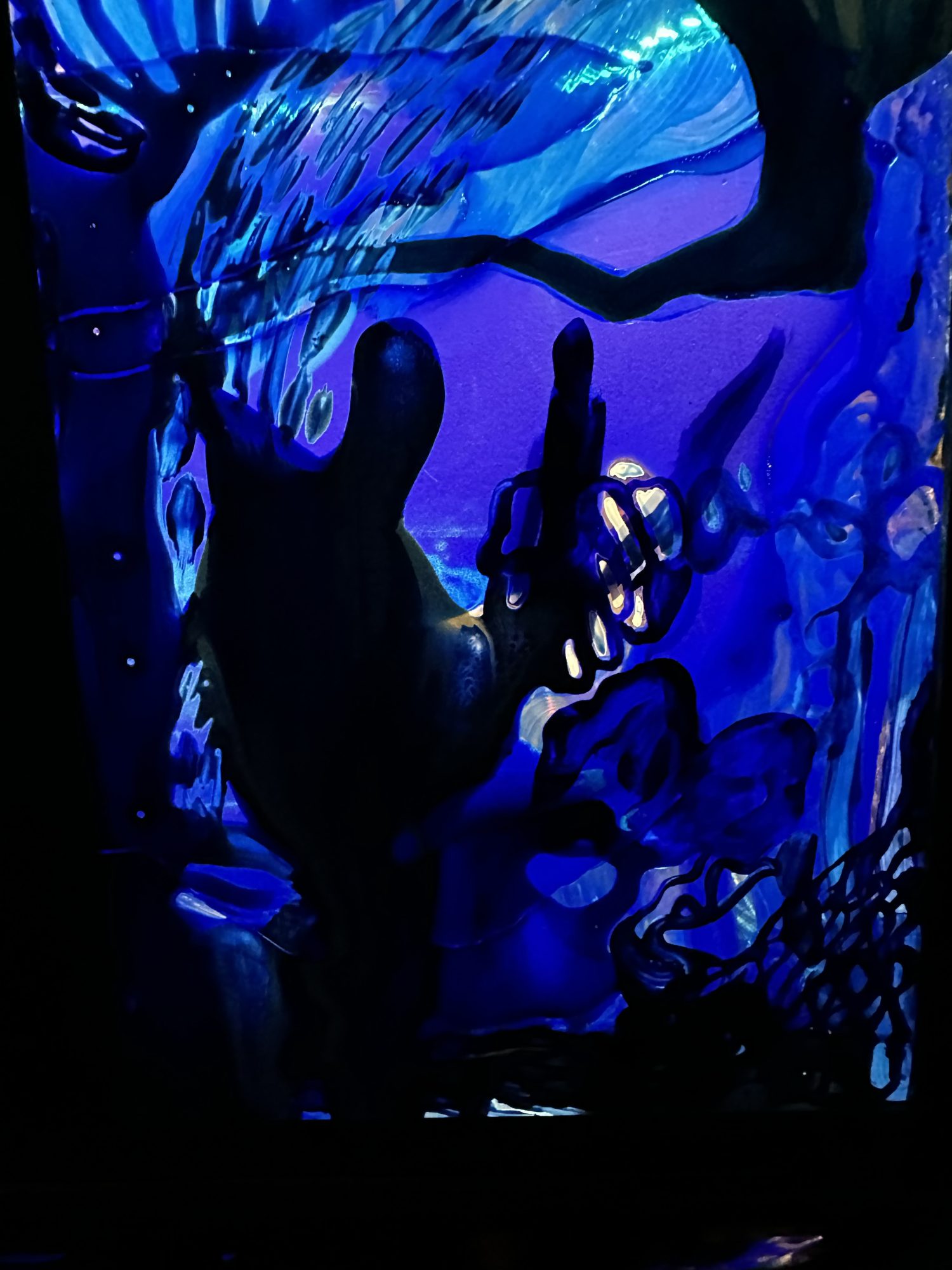
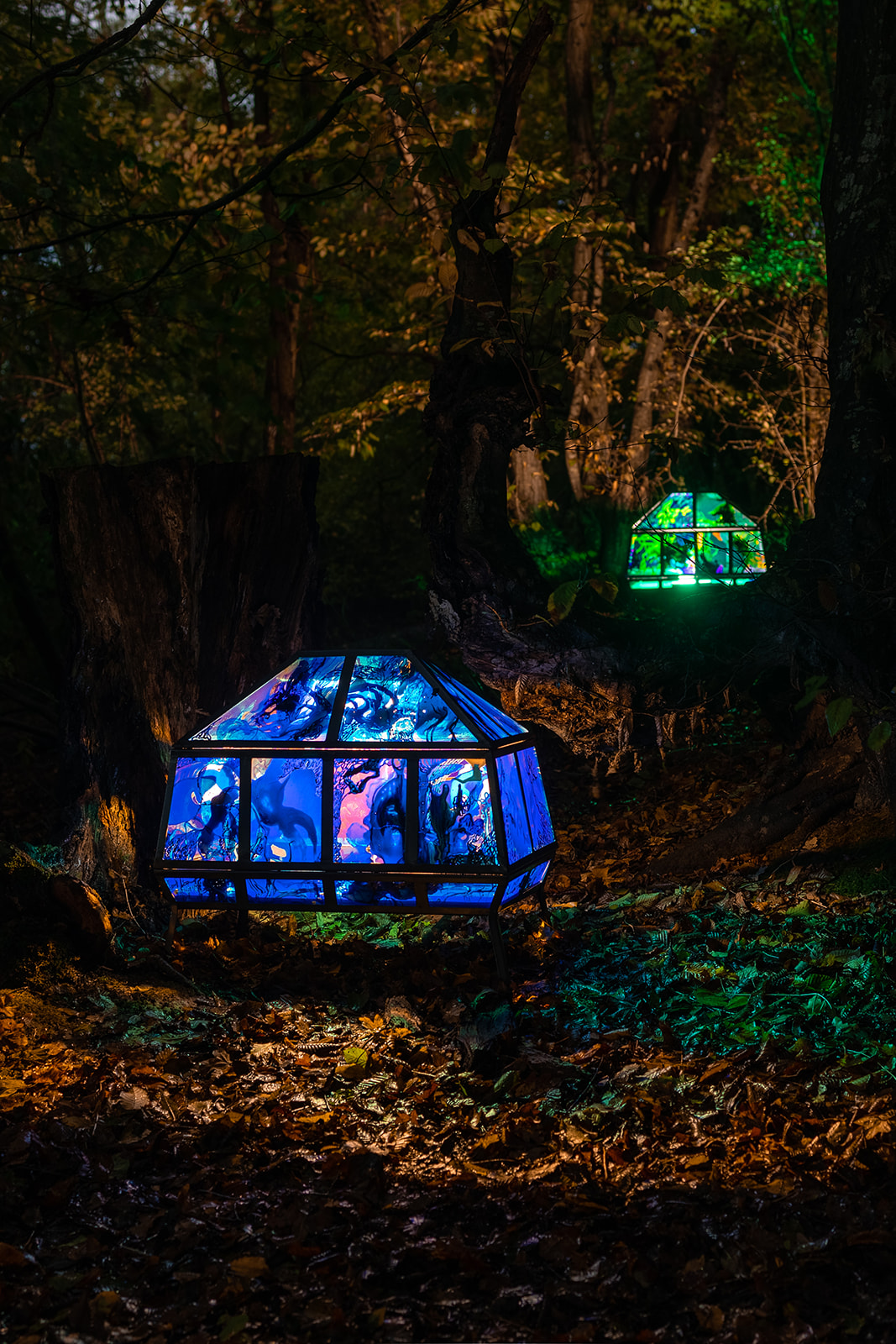
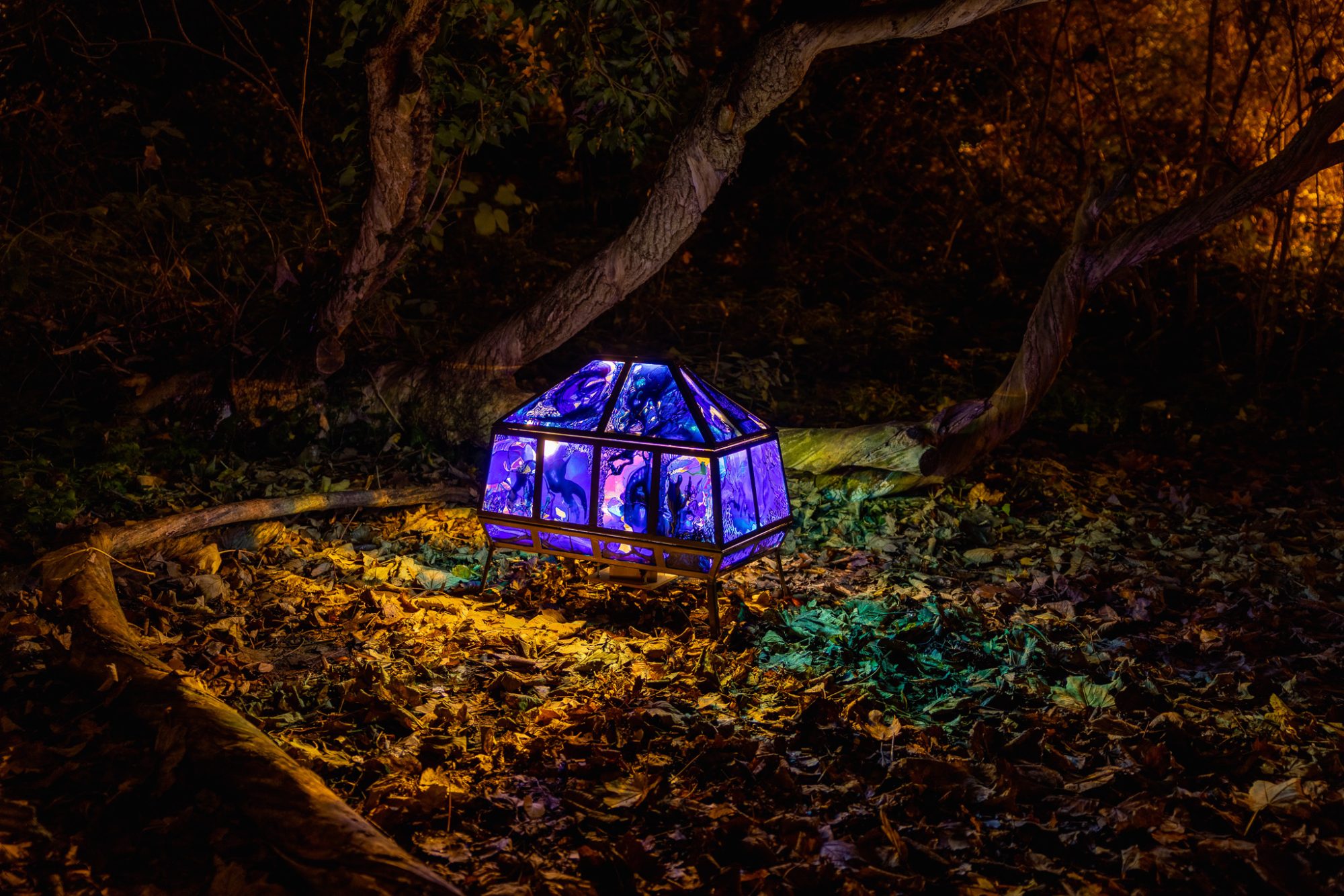
The resulting installation seeds poetic narrative and illuminated glass ‘cocoon-caskets’ throughout dusk-time landscapes that are ‘off the beaten track’, inviting audiences on a self-guided journey into the world of big data. A surreal and meditative narrative, positioned from the perspective of a dataset remembering its first dream, is experienced through headphones, while visitors wander by torchlight to happen across flickering, illuminated sculptures. Exploring the importance of both cataloging the natural world and of touching it with our imaginations, the installation is full of sorrow and of hope.
Artist Statements
“Each ‘casket-cocoon’ contains a multitude of emotions and moments of human encounters with nature, and reaches for an understanding and an imagining of the outer world. However, its inner world is full of gaps as species continue to decline and huge swathes of land goes under-recorded. How can it acknowledge the absence of not only the moths and butterflies that are ‘unseen’ but also a greater diversity of humans and landscapes that are missing from its data? The casket-cocoons swirl with this confusion and grief, and yet the dataset still hopes and dreams and there is a beauty in that hoping and dreaming.”
Bryony Ella
“I think I fell in love a little bit with our dataset as its narrative emerged. Its non-linear, questioning, dark-wood dream is the journey the world is beginning to take – a journey that begins with regarding nature as something ‘other’, something that can be reduced to its constituent parts, and moves beautifully towards a merging.”
Thomas Sharp
About the research
There has never been a more urgent need to build an accurate picture of the natural world around us.
The Dataset’s Dream is in part inspired by DECIDE, a new web tool developed by scientists at the UK Centre for Ecology and Hydrology in partnership with Butterfly Conservation and six other organisations. It is focused on generating high-quality, detailed information on biodiversity through citizen science.
Biodiversity is essential for human life and yet a recent report has set out a stark picture of the UK as one of the most biodiversity depleted countries in the world. Over the past fifty years, three-quarters of butterflies have declined and the abundance of the larger moths has declined by 33%, primarily due to habitat loss and changes in land use. Accurate data, recorded by volunteers, is crucial for decision-making, enabling us to identify locations that are particularly rich in biodiversity or are home to threatened species.
Existing butterfly and moth records typically come from nature reserves or areas near to where recorders live, leaving other parts of the country under-recorded. DECIDE ‘nudges’ citizen scientists to step off the beaten track and record in areas where we currently have very little data by highlighting the places where records are most needed.
“Collaborating with artists was valuable to open new ways of engaging with people about our science, but the process of collaboration also gave us, as scientists on the project, new insights into our work. We’re excited to see the ways in which audiences will reflect on their relationship with nature and the value of digital biodiversity data by engaging with The Dataset’s Dream.”
Michael Pocock, Lead Scientist
Creative Team
Bryony Ella: Visual Artist and Project Manager
Clare O’Donoghue: Lighting Design
Ewelina Ruminska: Photographer
Minyung Im: Filmmaker
Thomas Sharp: Poet and Writer
Tricia Brioux: Voice
Tours
2026 Hoveton Great Broad, Norfolk
2026 University of Exeter, Cornwall
2025 Festival of Nature, Bristol
2024 Harwell Science Campus, Oxford
2023 St Nicks Nature Reserve, York
2022 Orleans House Gallery, London
Responses
It has reaffirmed my belief that simply recording nature is not enough – we must feel it, be with it, if we are to restore the balance between humans and the rest of the natural world with which we share the planet.
It felt like treading in an unseen frontier space.
It’s been a great opportunity to get a new perspective on the work that we do. Often, we focus so much on the data we can lose touch with the nature it represents.
In The Dataset’s Dream, the dataset speaks to scientists about both the value of their role and their limitations. Bryony and Thomas have given The Dataset a personality and a voice, which has made me think about data and my role as a scientist in a different way.
This is a beautifully complex and deeply thoughtful way to help us reimagine our understanding of environmental data.
Funded by the Natural Environment Research Council, part of UK Research and Innovation, through the Constructing a Digital Environment Strategic Priorities Fund.
The Dataset's Dream
What is lost and what is gained when we turn nature into data?
Pondering our relationship to nature in a highly digitised world, The Dataset’s Dream is an installation that invites visitors to consider how our relationship to nature is shaped by the act of looking at it through the lens of a camera and then translating these encounters into hard facts and figures.
Commissioned by researchers working in the world of big data and biological recording, this art-science collaboration asked: What are the longterm and real-world impacts of absences and gaps in the collected data – the moths and butterflies that are unrecorded and overlooked? And how do we reconcile the desire to advocate for the protection of native species with the “enticing futility of collecting and preserving forever the names of everything” – poet Thomas Sharp.
Poet Thomas Sharp and artist Bryony Ella spent the summer with a team of scientists who have been developing a web tool to help people identify locations in Britain most in need of new biological records. The creative response to their work was to explore their work through the lens of the dataset itself.
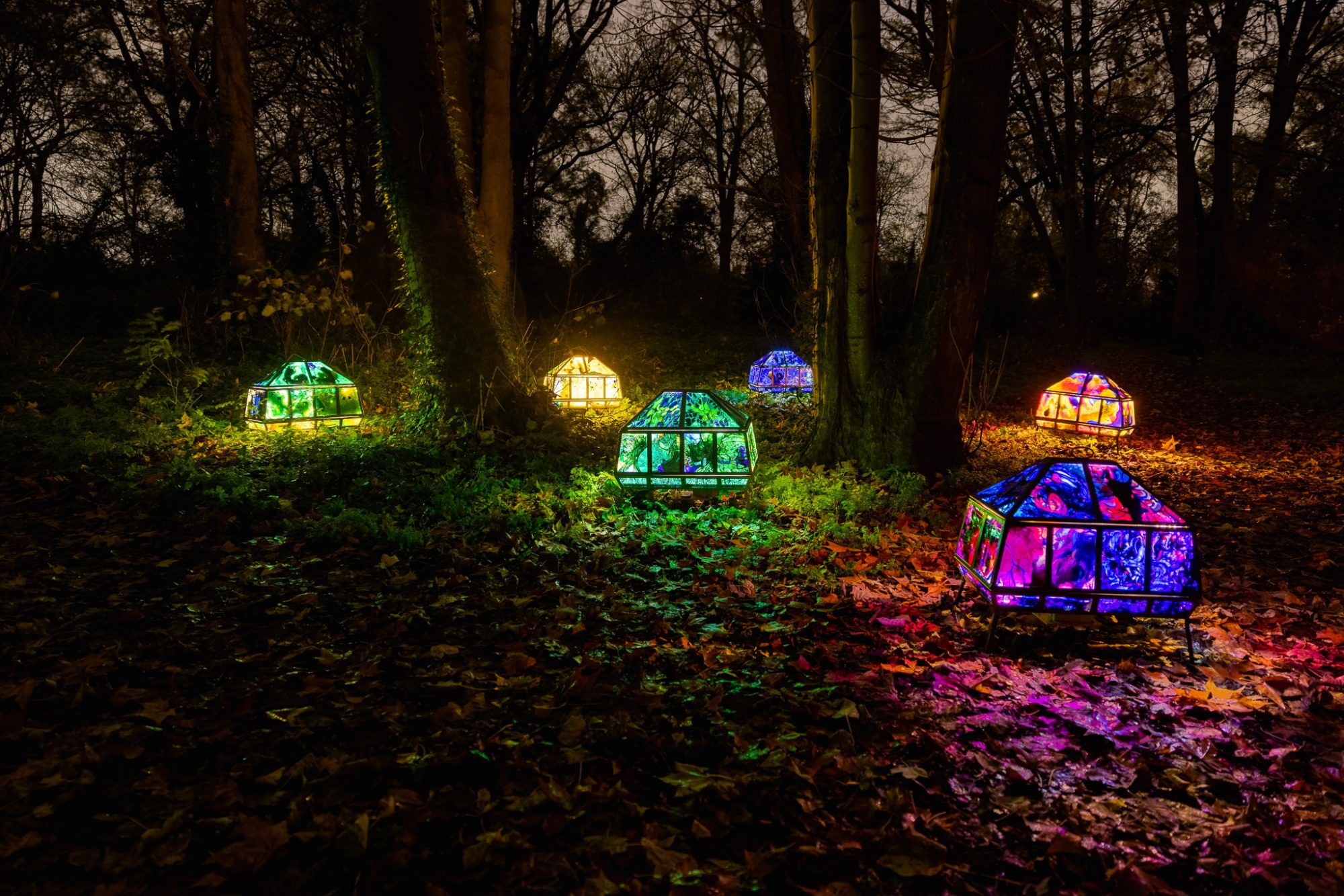
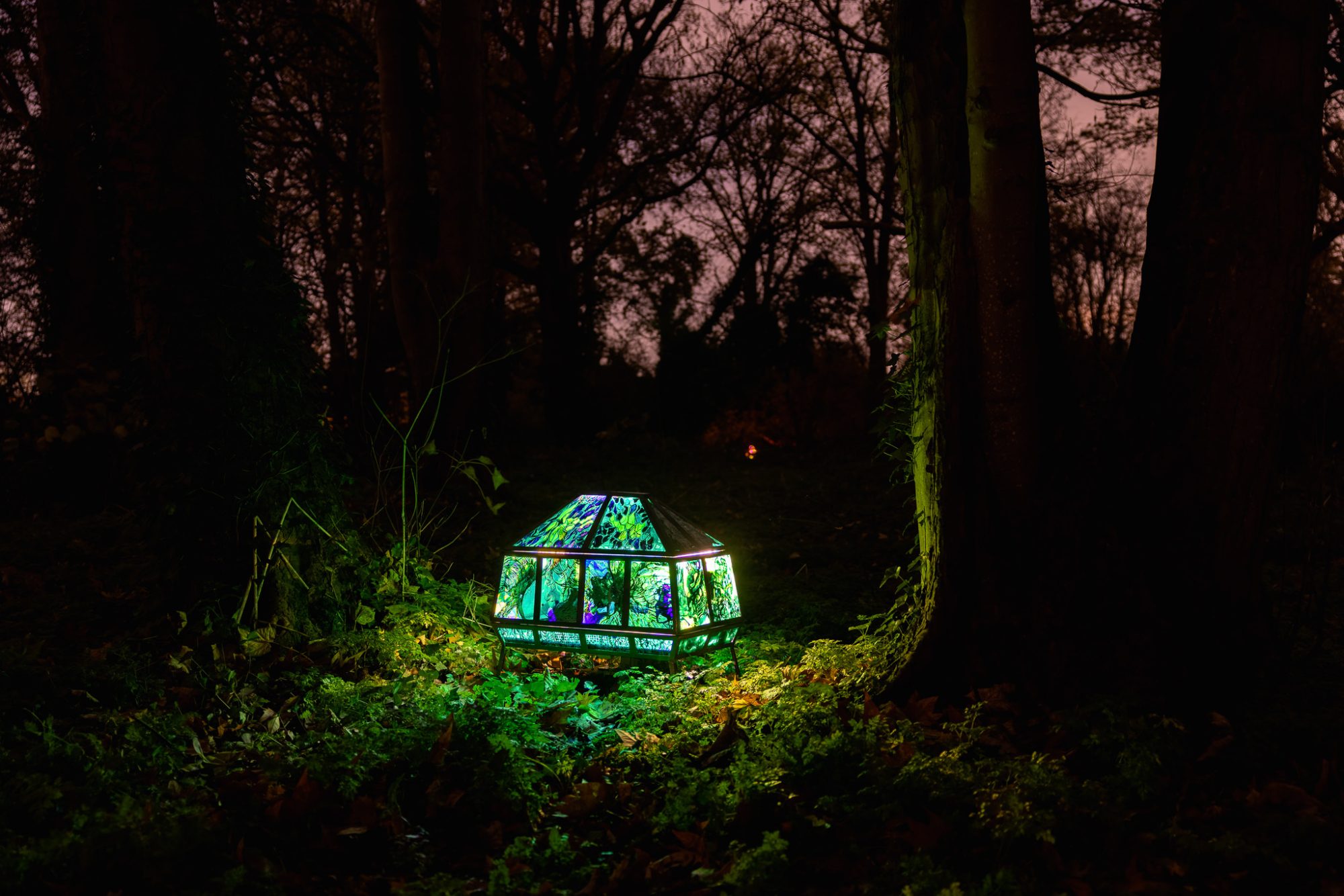
The resulting installation seeds poetic narrative and illuminated glass ‘cocoon-caskets’ throughout dusk-time landscapes that are ‘off the beaten track’, inviting audiences on a self-guided journey into the world of big data. A surreal and meditative narrative, positioned from the perspective of a dataset remembering its first dream, is experienced through headphones, while visitors wander by torchlight to happen across flickering, illuminated sculptures. Exploring the importance of both cataloging the natural world and of touching it with our imaginations, the installation is full of sorrow and of hope.
Artist Statements
“Each ‘casket-cocoon’ contains a multitude of emotions and moments of human encounters with nature, and reaches for an understanding and an imagining of the outer world. However, its inner world is full of gaps as species continue to decline and huge swathes of land goes under-recorded. How can it acknowledge the absence of not only the moths and butterflies that are ‘unseen’ but also a greater diversity of humans and landscapes that are missing from its data? The casket-cocoons swirl with this confusion and grief, and yet the dataset still hopes and dreams and there is a beauty in that hoping and dreaming.”
Bryony Ella
“I think I fell in love a little bit with our dataset as its narrative emerged. Its non-linear, questioning, dark-wood dream is the journey the world is beginning to take – a journey that begins with regarding nature as something ‘other’, something that can be reduced to its constituent parts, and moves beautifully towards a merging.”
Thomas Sharp
About the research
There has never been a more urgent need to build an accurate picture of the natural world around us.
The Dataset’s Dream is in part inspired by DECIDE, a new web tool developed by scientists at the UK Centre for Ecology and Hydrology in partnership with Butterfly Conservation and six other organisations. It is focused on generating high-quality, detailed information on biodiversity through citizen science.
Biodiversity is essential for human life and yet a recent report has set out a stark picture of the UK as one of the most biodiversity depleted countries in the world. Over the past fifty years, three-quarters of butterflies have declined and the abundance of the larger moths has declined by 33%, primarily due to habitat loss and changes in land use. Accurate data, recorded by volunteers, is crucial for decision-making, enabling us to identify locations that are particularly rich in biodiversity or are home to threatened species.
Existing butterfly and moth records typically come from nature reserves or areas near to where recorders live, leaving other parts of the country under-recorded. DECIDE ‘nudges’ citizen scientists to step off the beaten track and record in areas where we currently have very little data by highlighting the places where records are most needed.
“Collaborating with artists was valuable to open new ways of engaging with people about our science, but the process of collaboration also gave us, as scientists on the project, new insights into our work. We’re excited to see the ways in which audiences will reflect on their relationship with nature and the value of digital biodiversity data by engaging with The Dataset’s Dream.”
Michael Pocock, Lead Scientist
Creative Team
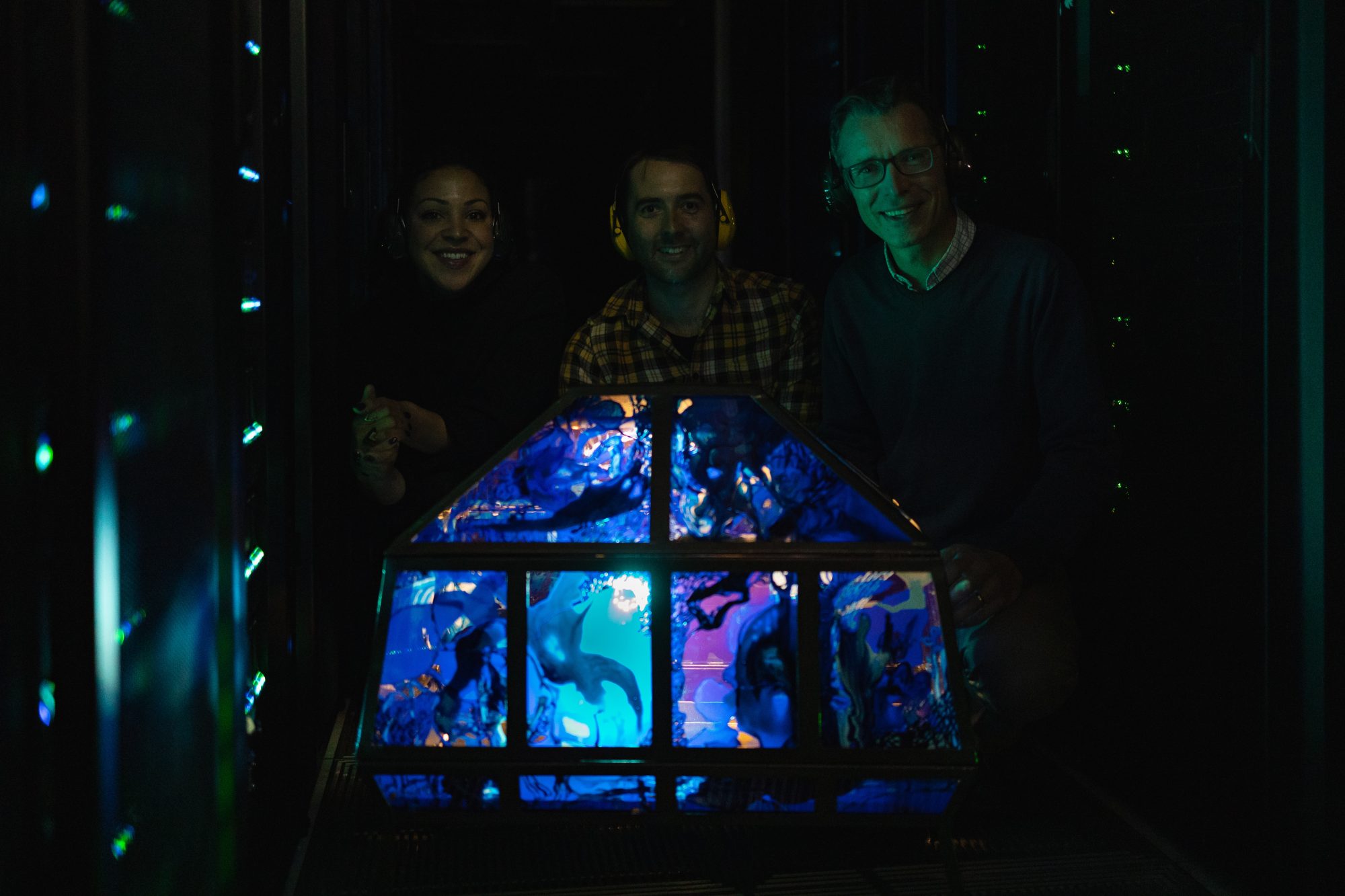
Bryony Ella: Visual Artist and Project Manager
Clare O’Donoghue: Lighting Design
Ewelina Ruminska: Photographer
Minyung Im: Filmmaker
Thomas Sharp: Poet and Writer
Tricia Brioux: Voice
Tours
2026 Hoveton Great Broad, Norfolk
2026 University of Exeter, Cornwall
2025 Festival of Nature, Bristol
2024 Harwell Science Campus, Oxford
2023 St Nicks Nature Reserve, York
2022 Orleans House Gallery, London
Responses
It has reaffirmed my belief that simply recording nature is not enough – we must feel it, be with it, if we are to restore the balance between humans and the rest of the natural world with which we share the planet.
It felt like treading in an unseen frontier space.
It’s been a great opportunity to get a new perspective on the work that we do. Often, we focus so much on the data we can lose touch with the nature it represents.
In The Dataset’s Dream, the dataset speaks to scientists about both the value of their role and their limitations. Bryony and Thomas have given The Dataset a personality and a voice, which has made me think about data and my role as a scientist in a different way.
This is a beautifully complex and deeply thoughtful way to help us reimagine our understanding of environmental data.
Funded by the Natural Environment Research Council, part of UK Research and Innovation, through the Constructing a Digital Environment Strategic Priorities Fund.