Wild Drawing
An experimental, embodied, ecocentric practice of noticing our place in nature, as nature.
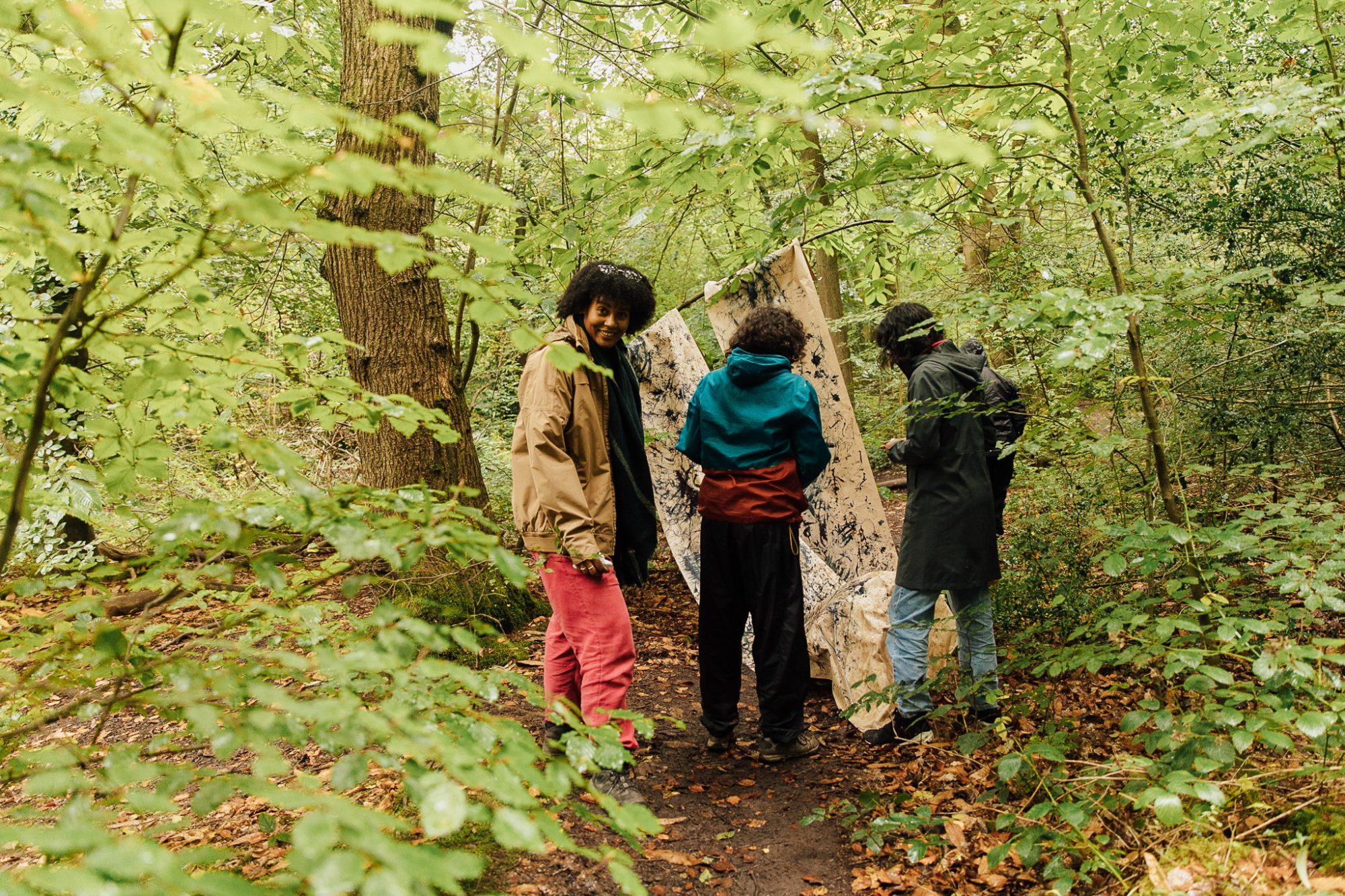
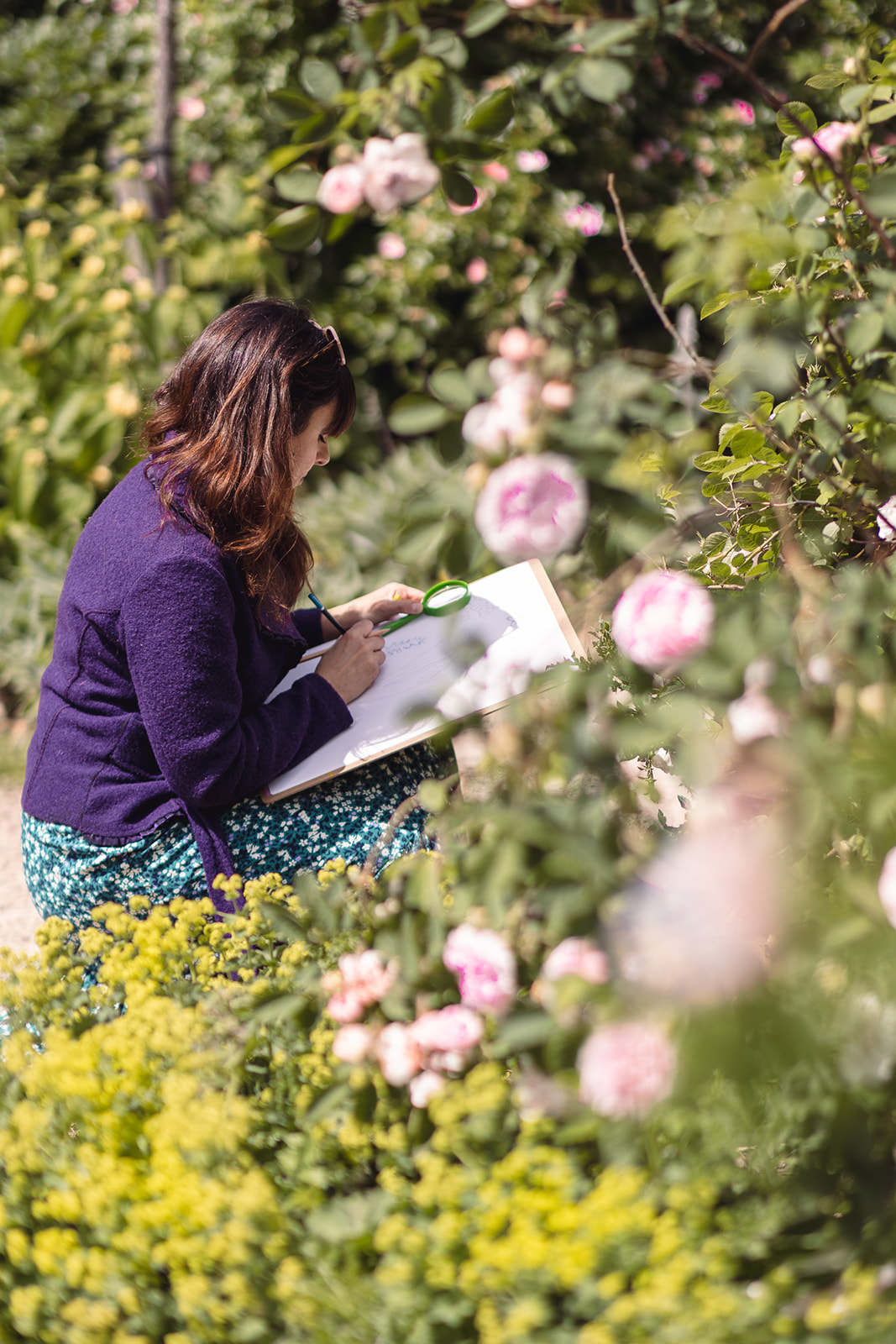
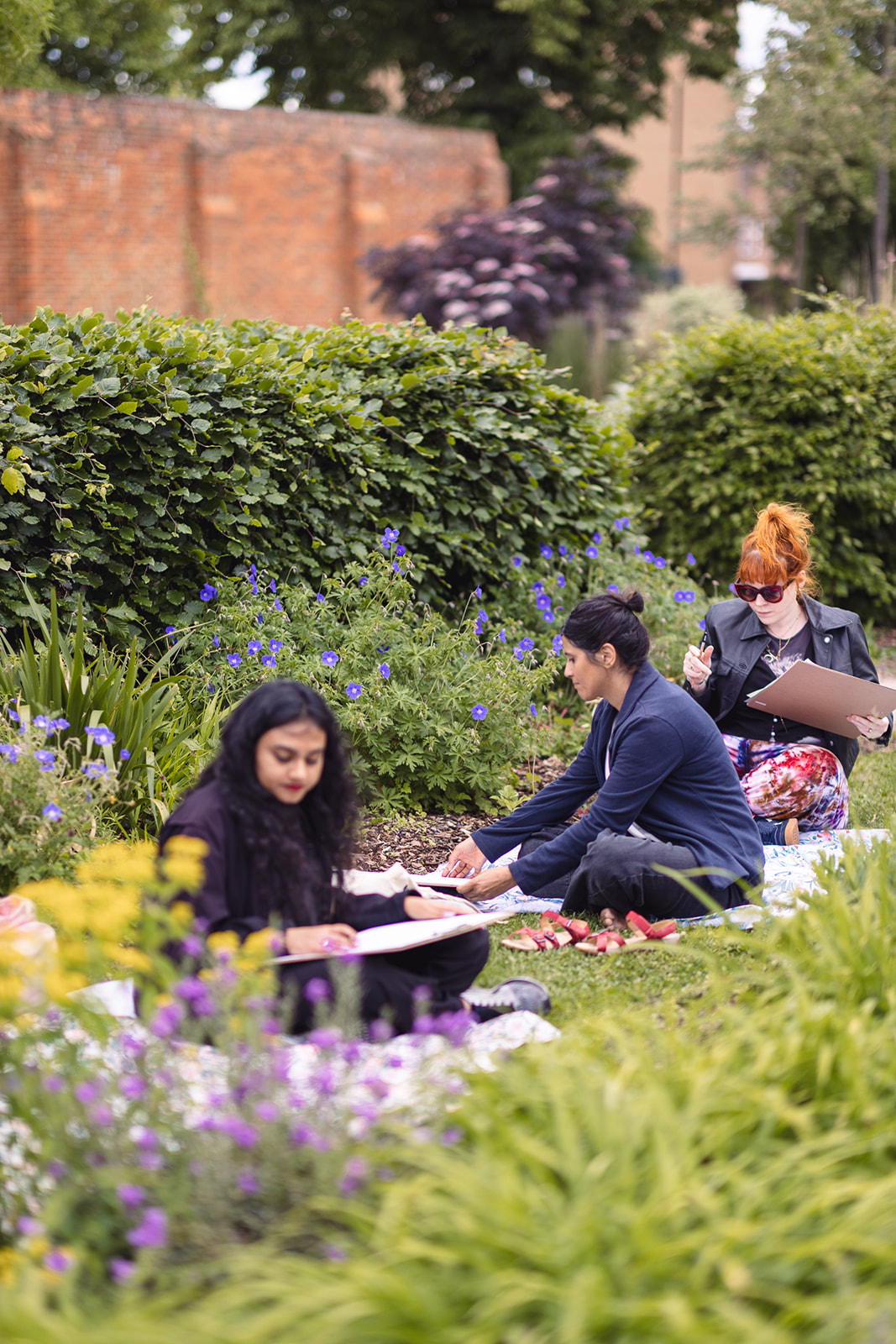
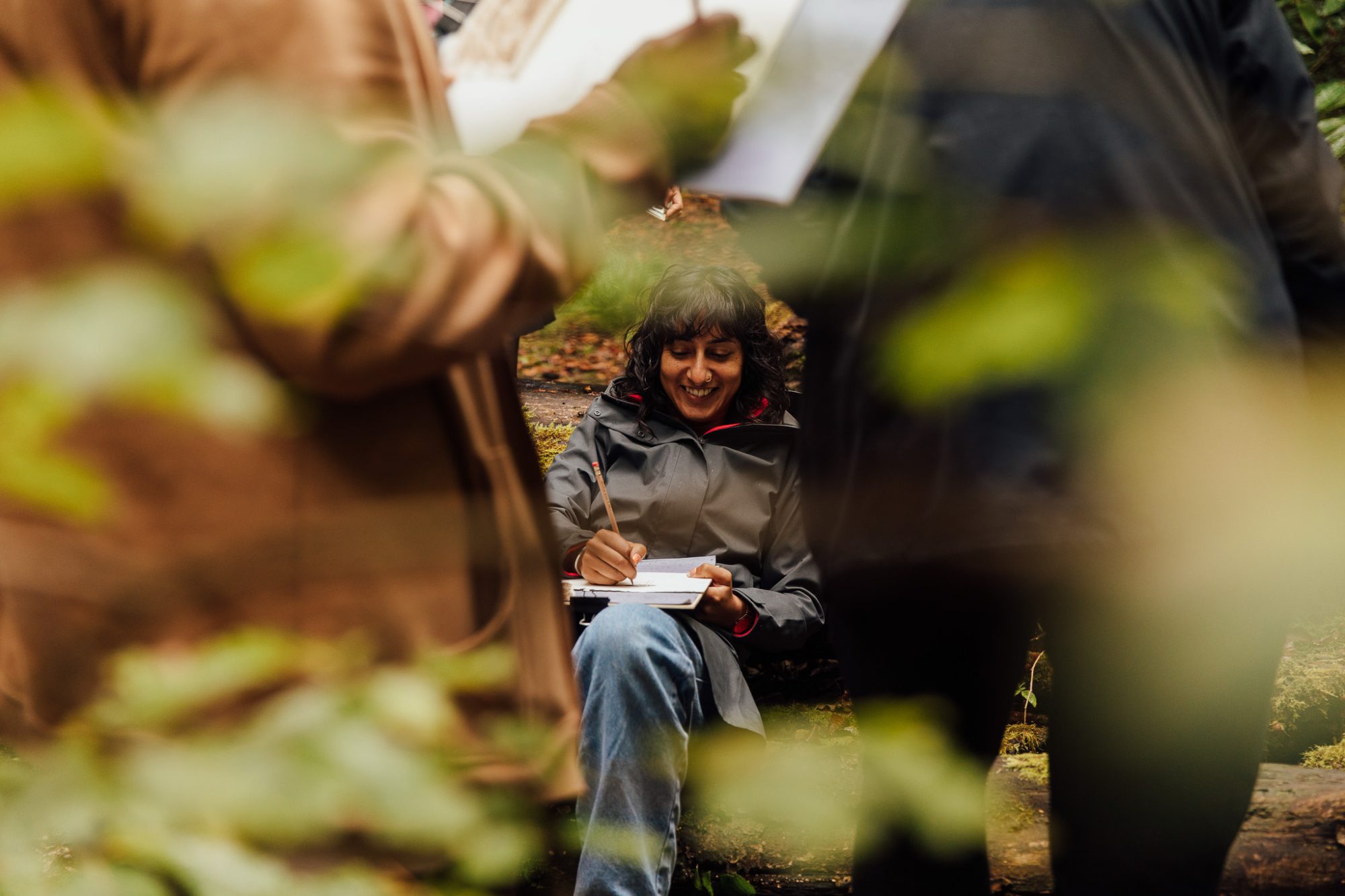
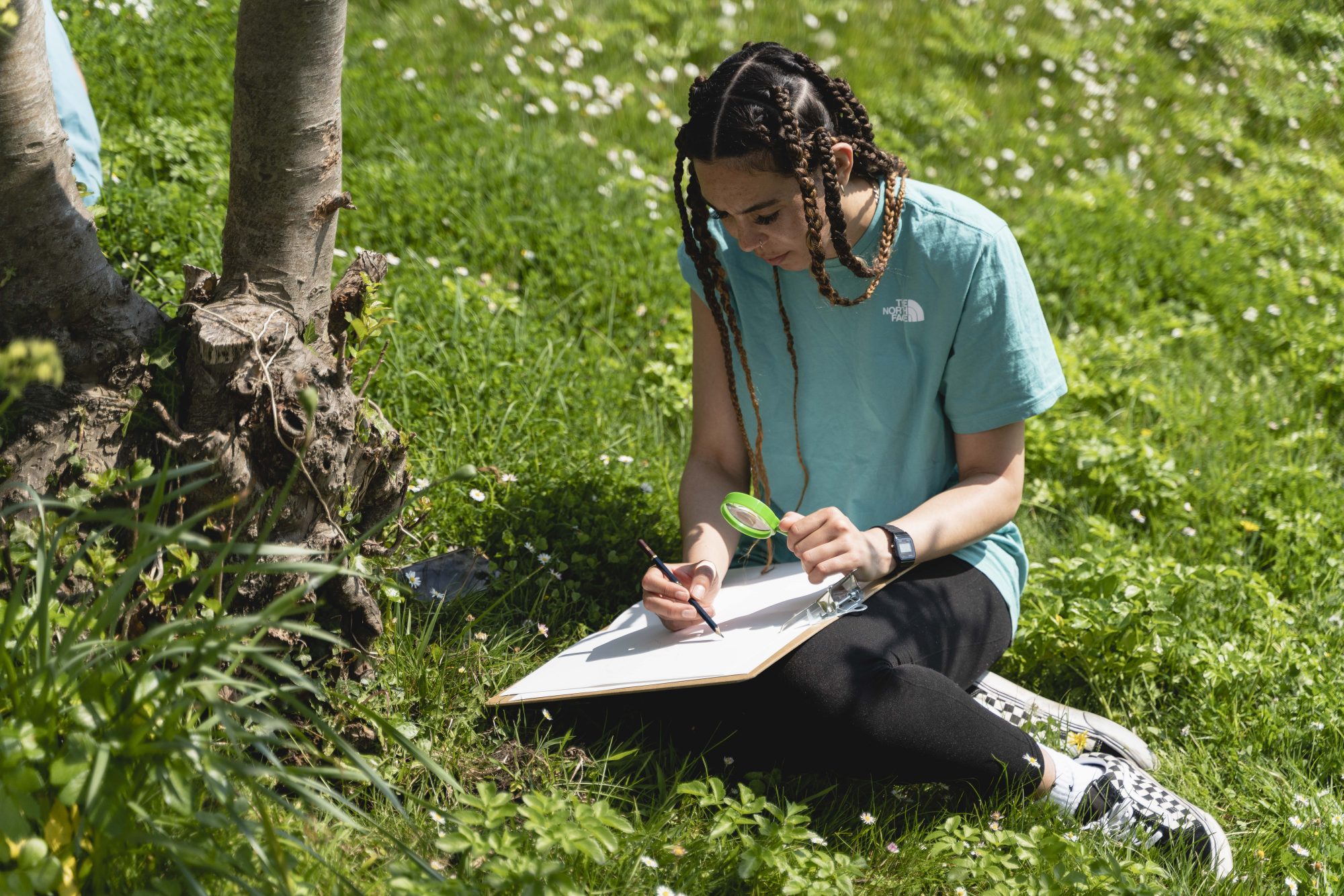
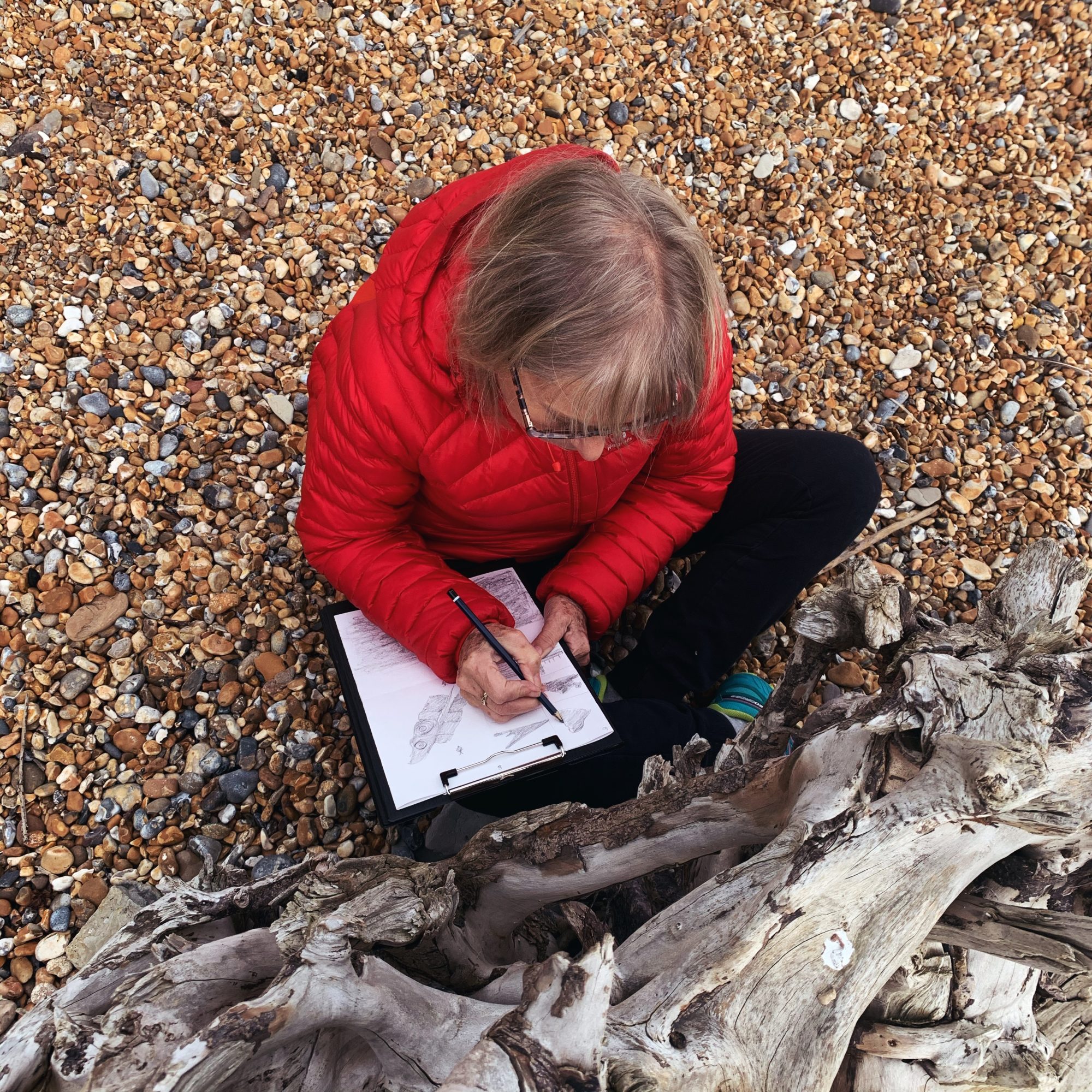
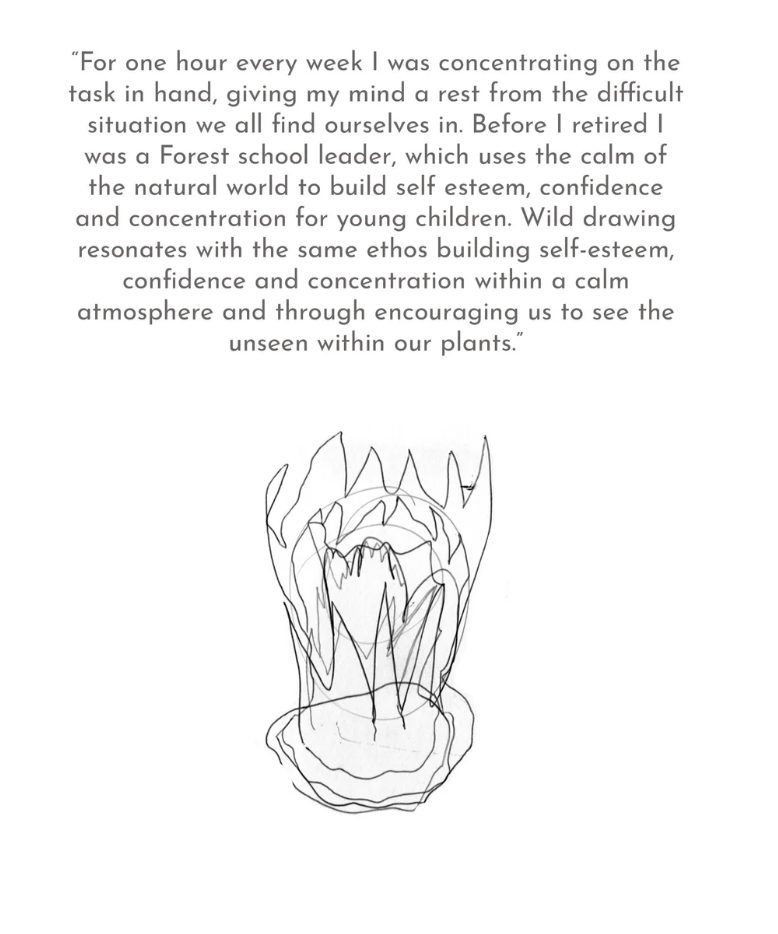
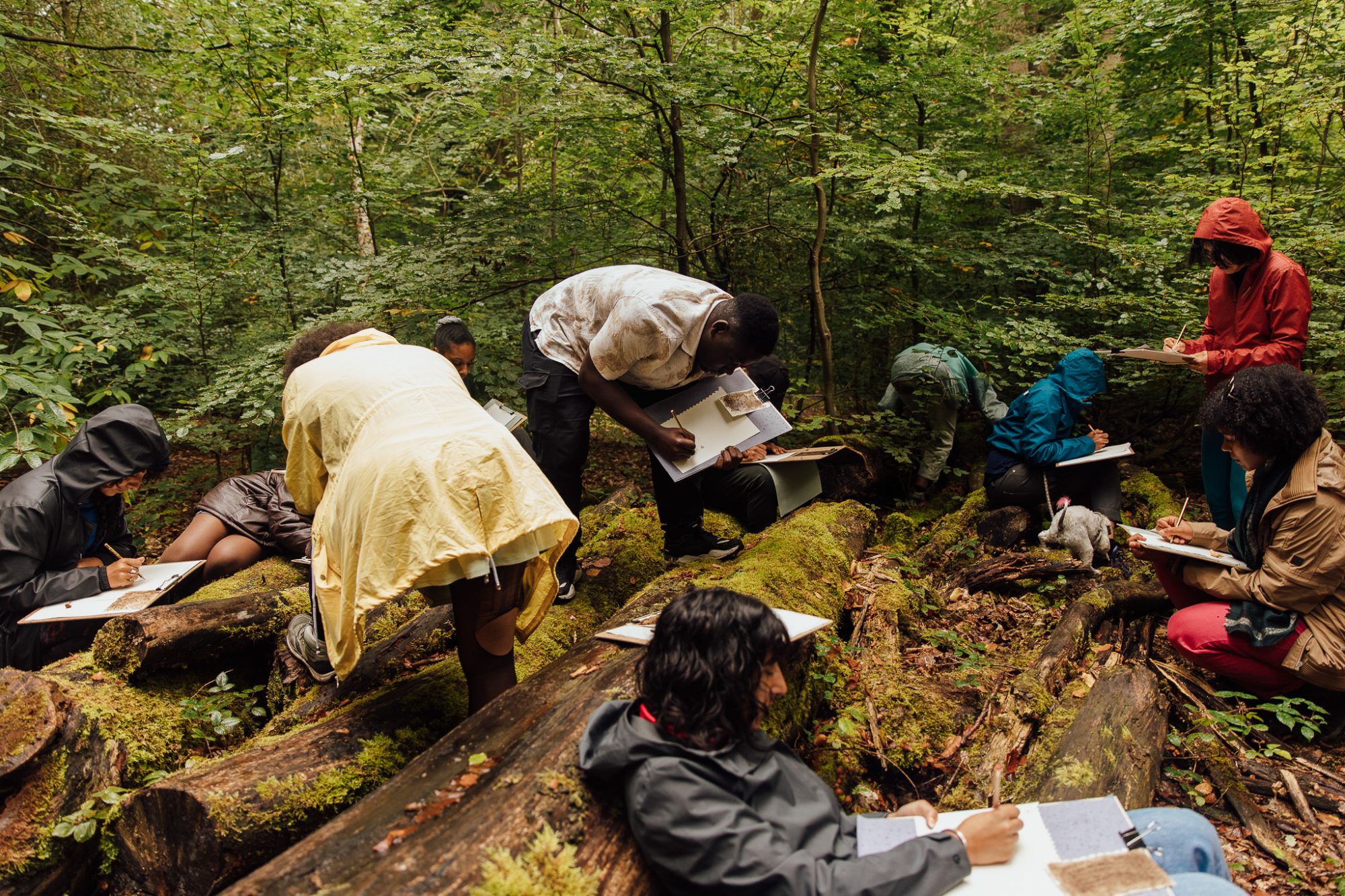
The purpose of ‘wild drawing’ is not to create aesthetically pleasing or realistic works of art. Instead, the focus is entirely on reconnecting with nature from bodily states of awe, attentiveness and humility. Drawing is just the medium through which this is supported.
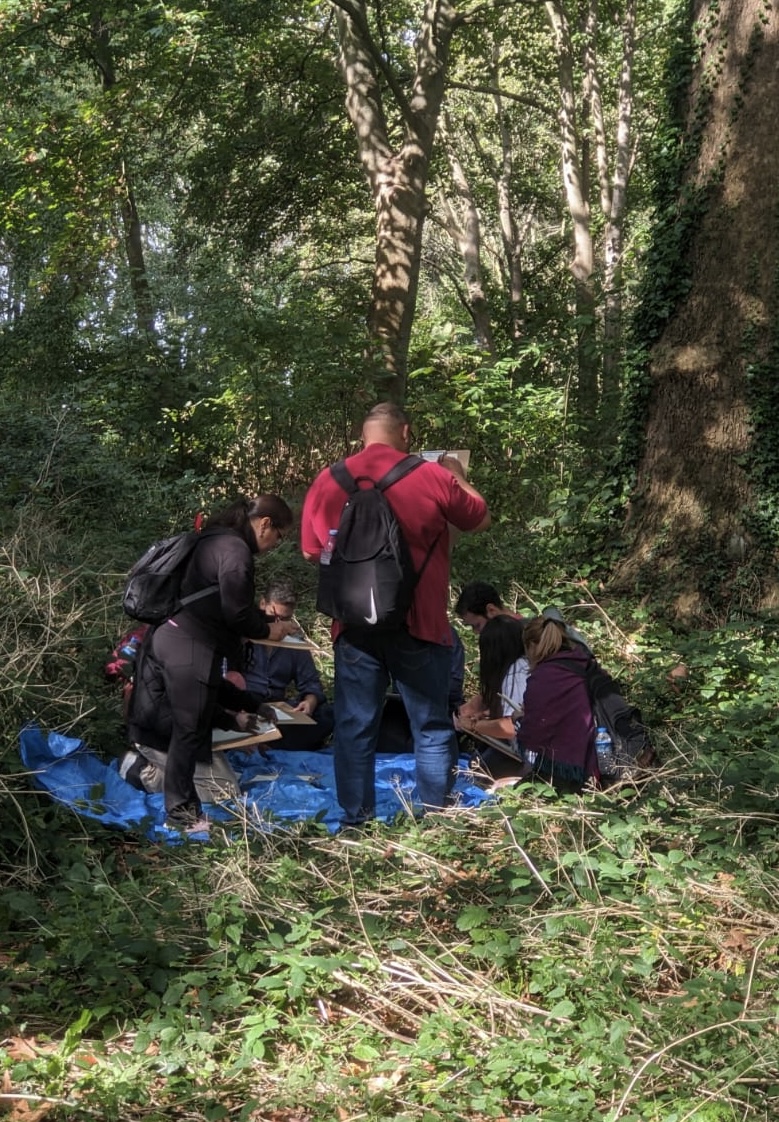
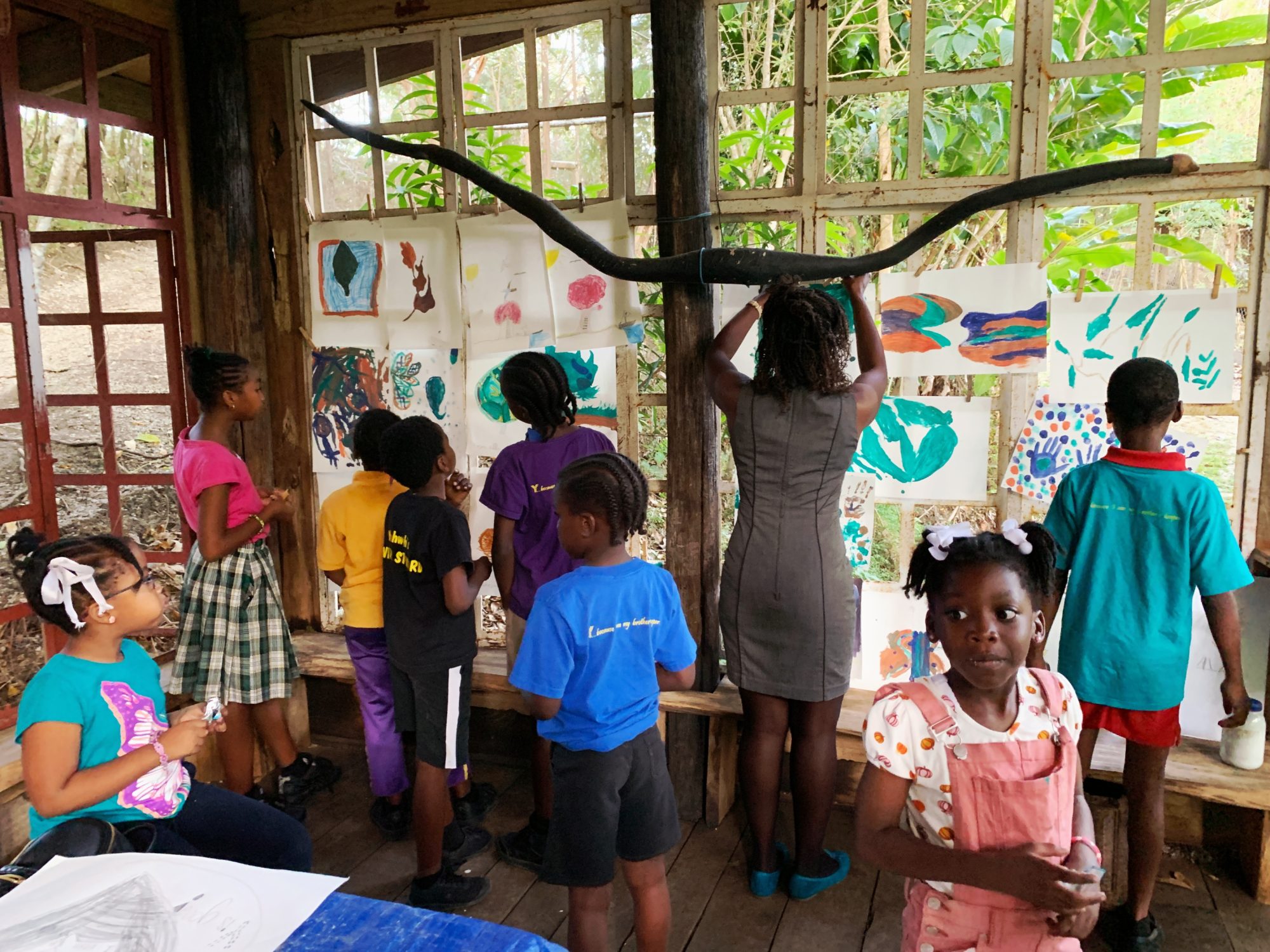
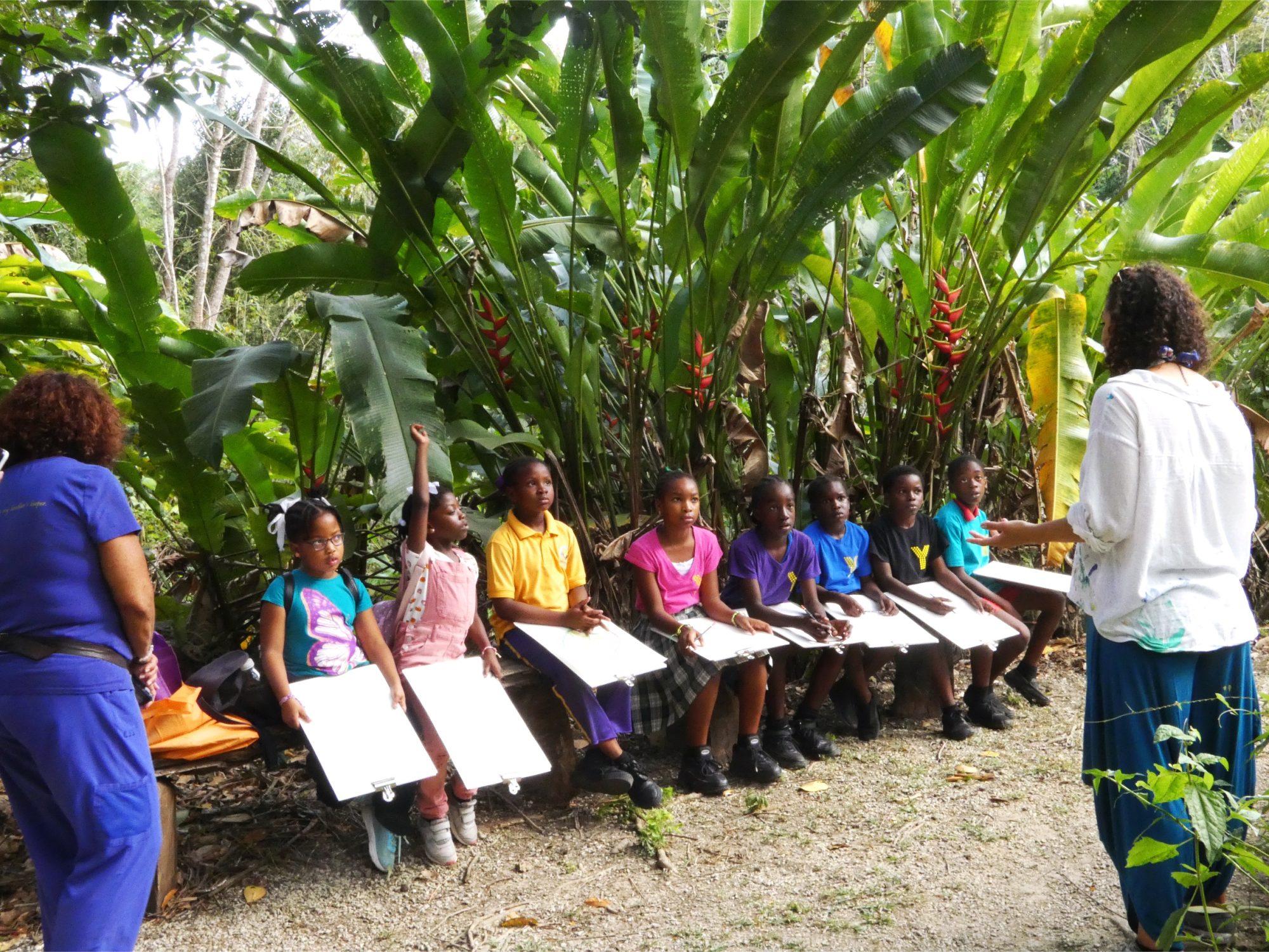
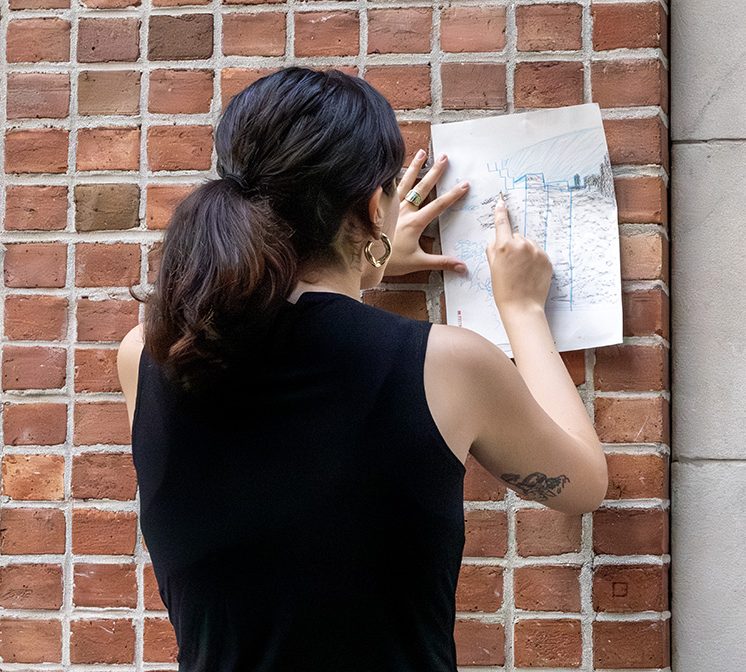
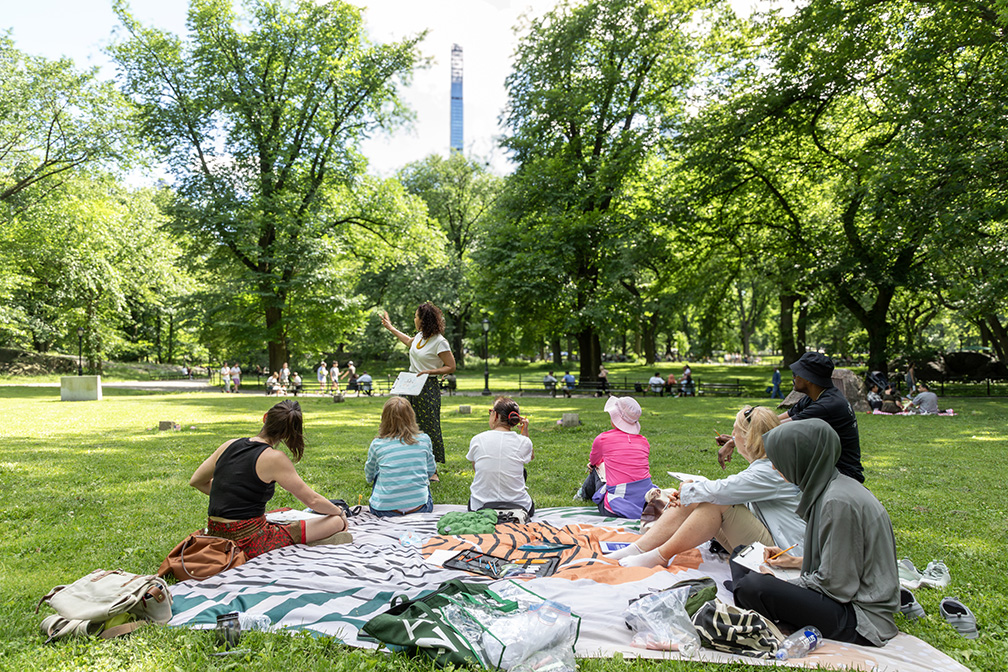
The practice has been foundational to studio development since 2020. Developed during the pandemic and evolved through artist residencies, it has been shared through guided walks with community groups and organisations across the UK, in the US, and in Trinidad and Tobago. It is also shared online via the Embodied Ecology Substack and in the book Wild Service: Why Nature Needs You (Bloomsbury 2024, see chapter ‘Belonging’ by Bryony Ella). Read about how wild drawing was integrated into an environmental history research project in New York here.
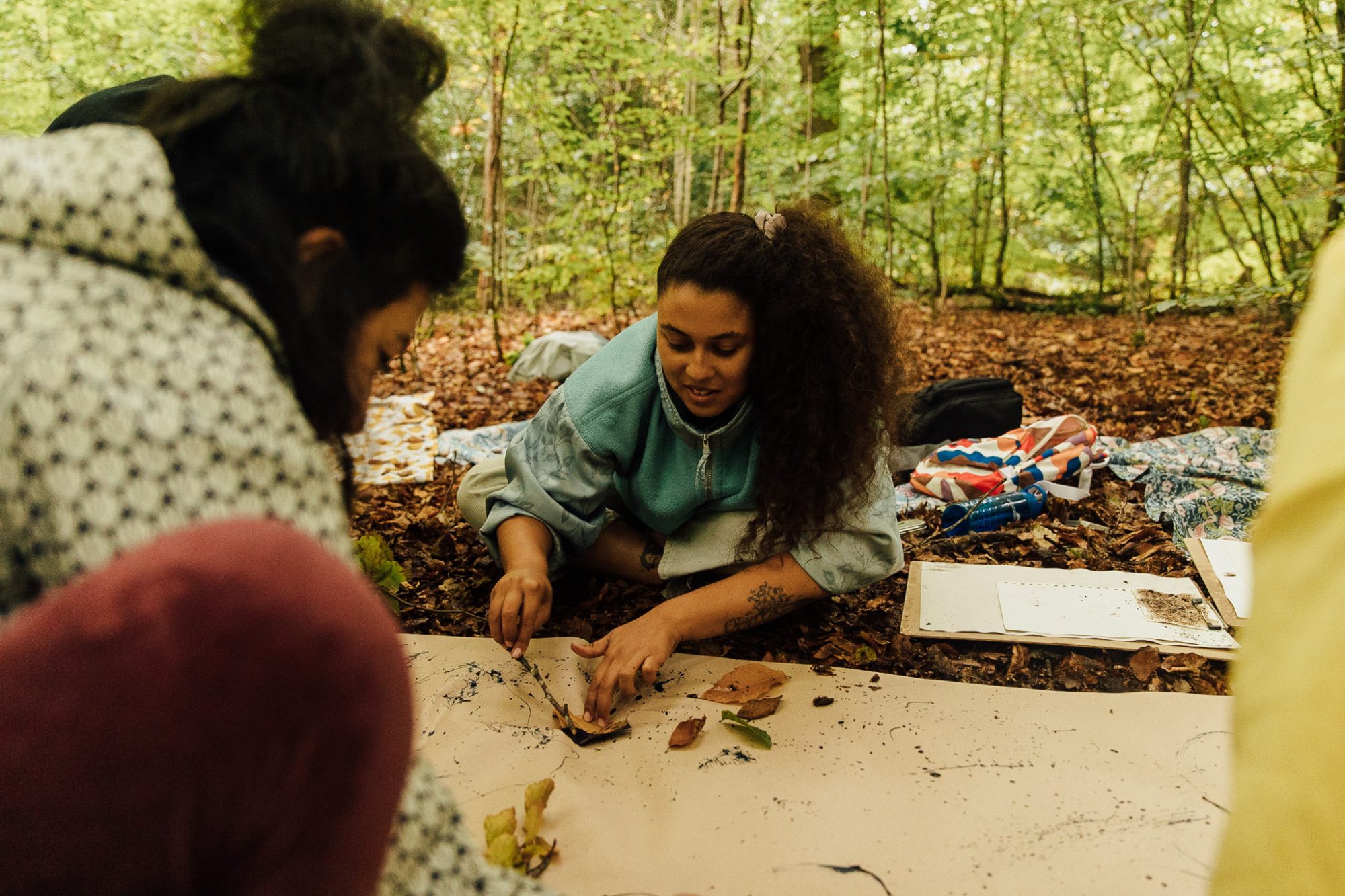
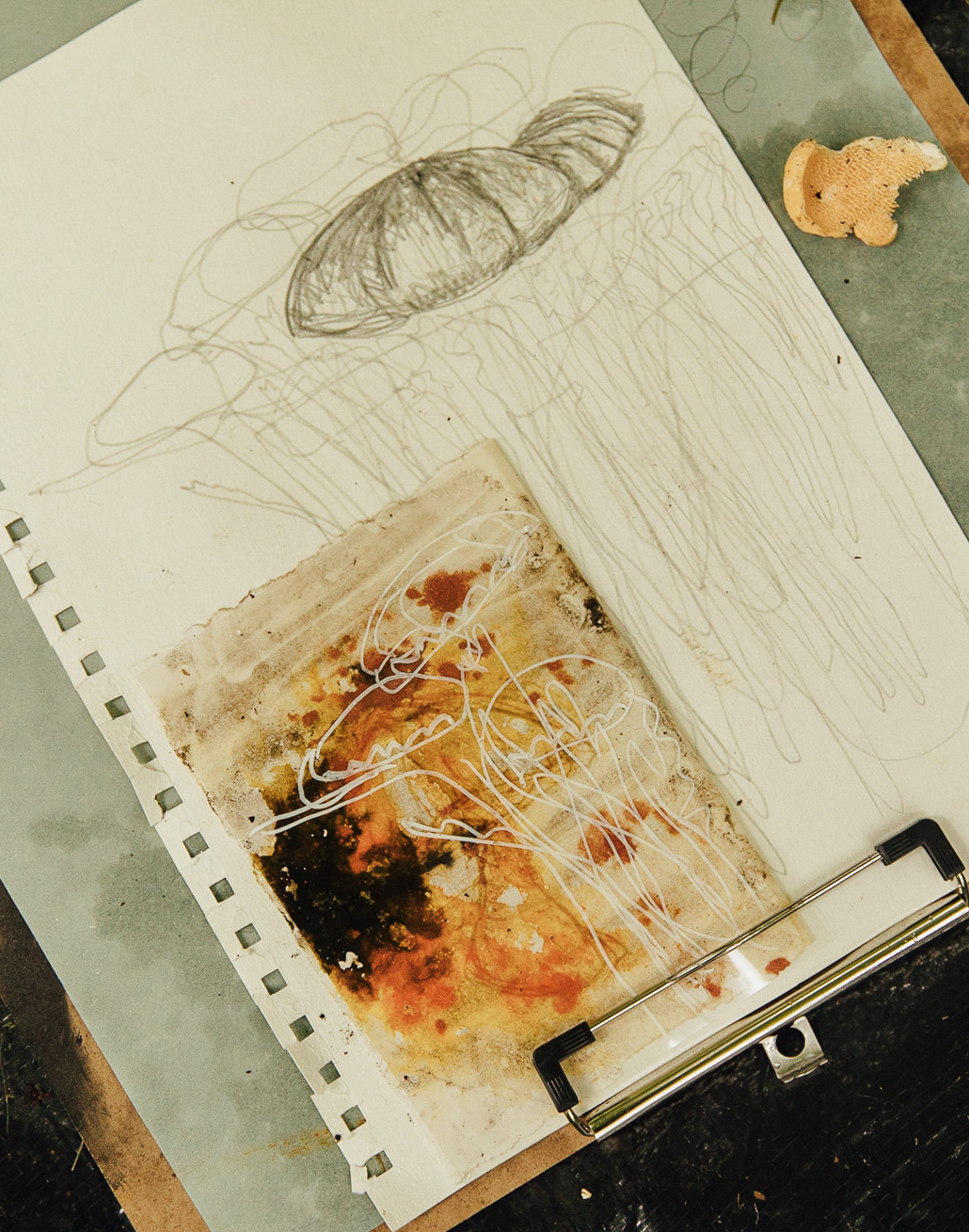
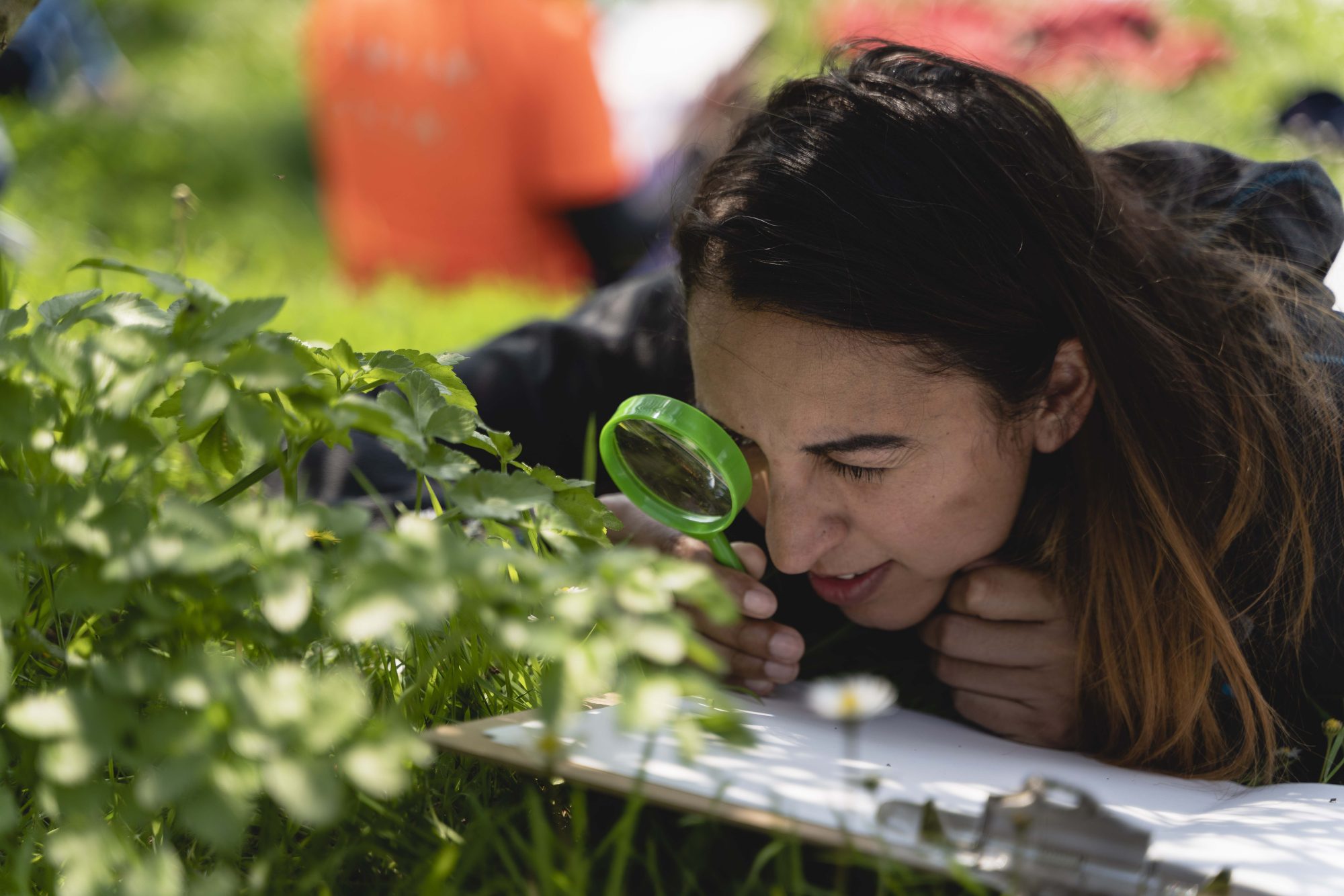
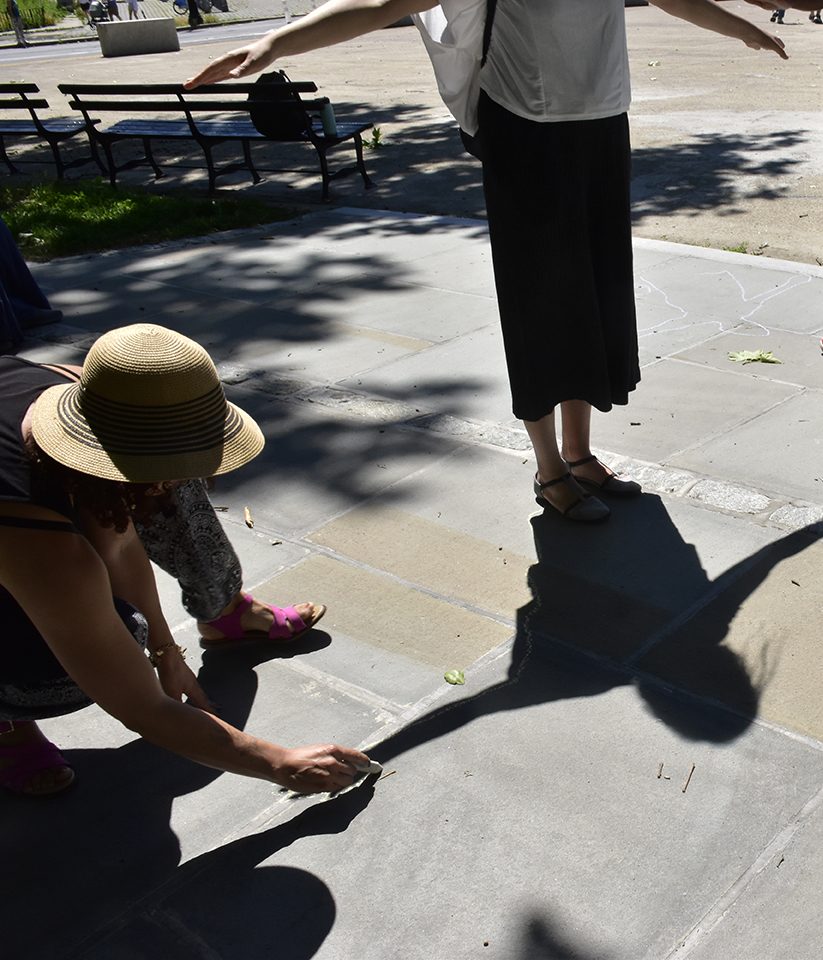
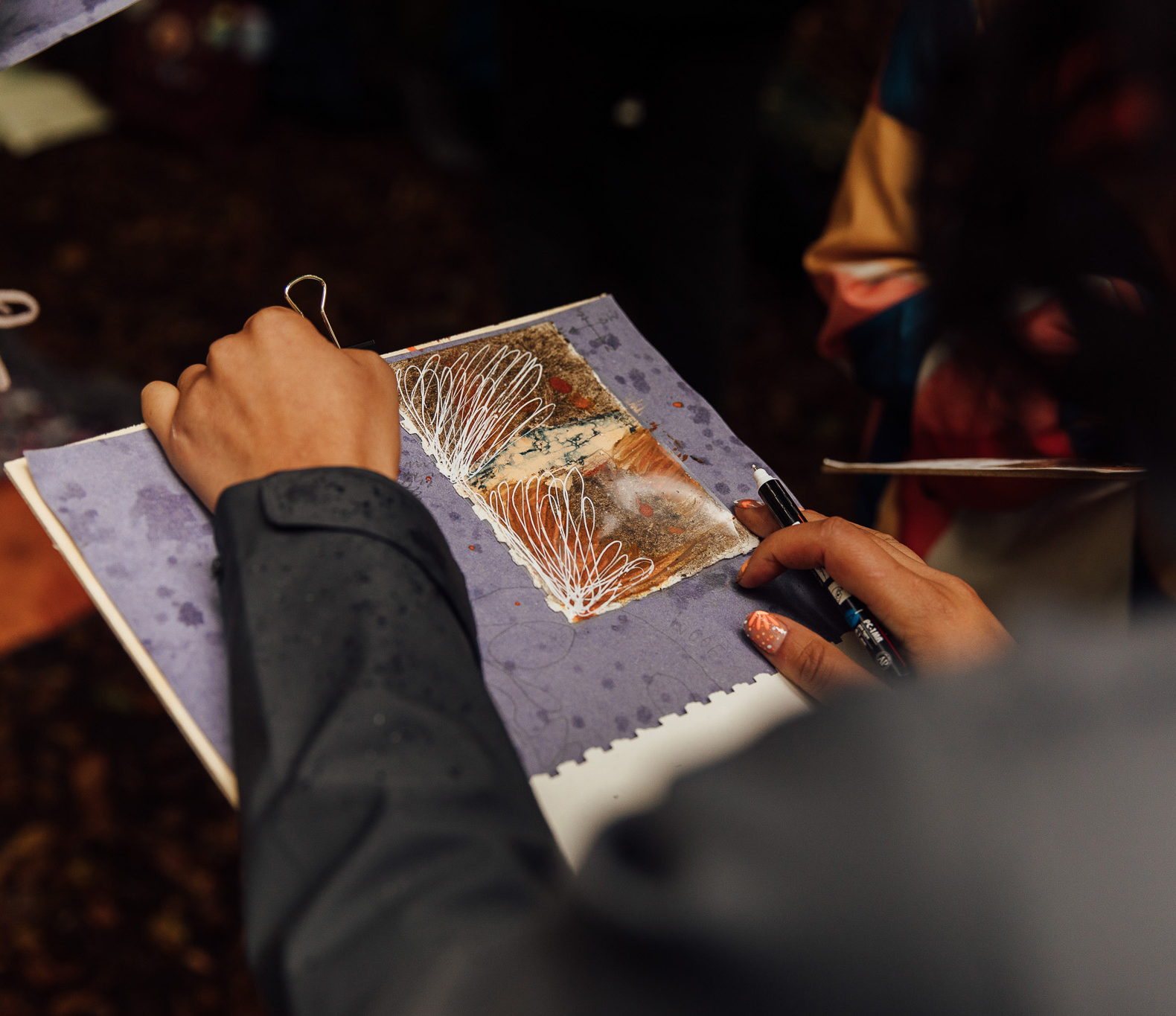
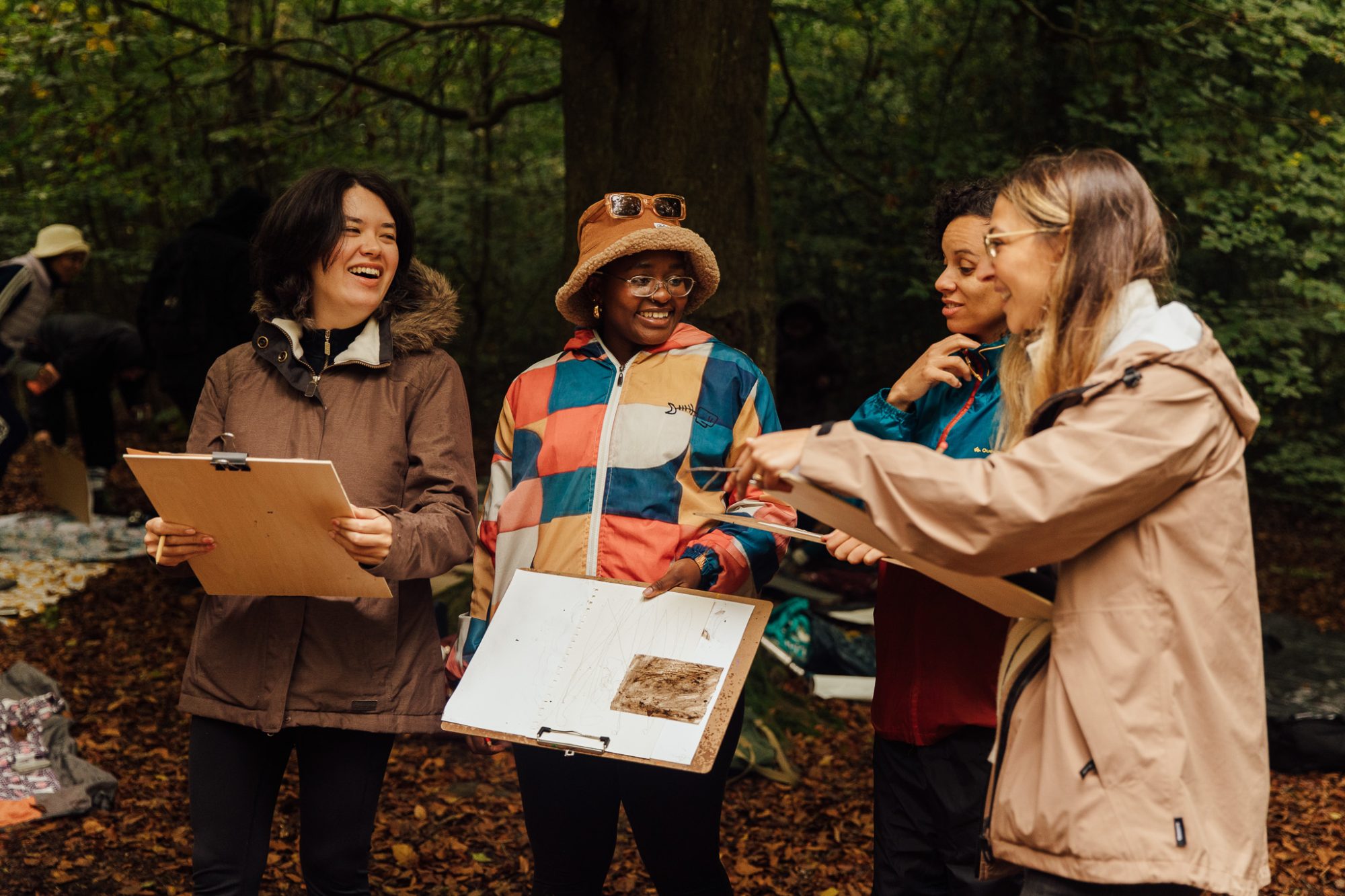
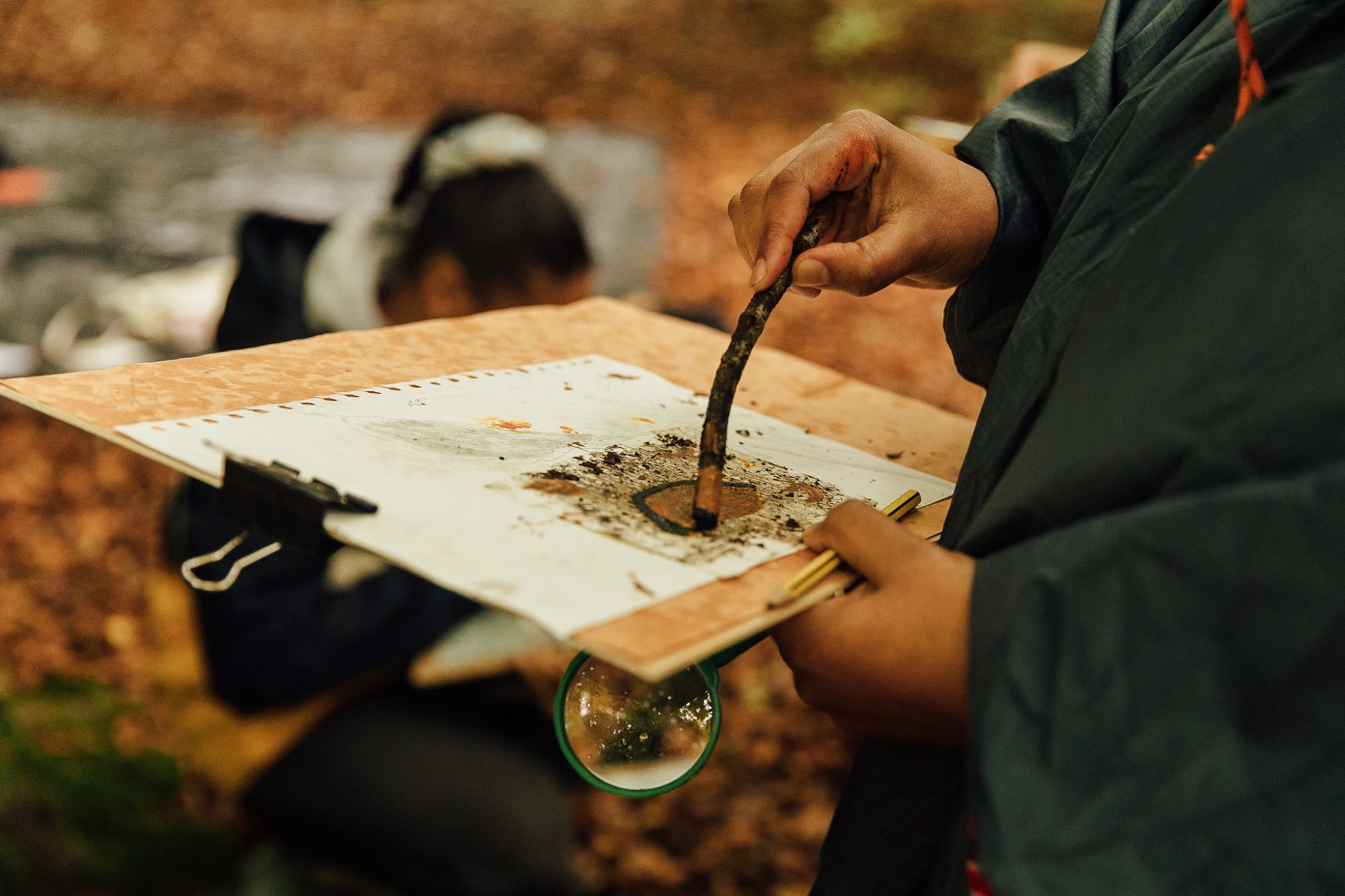
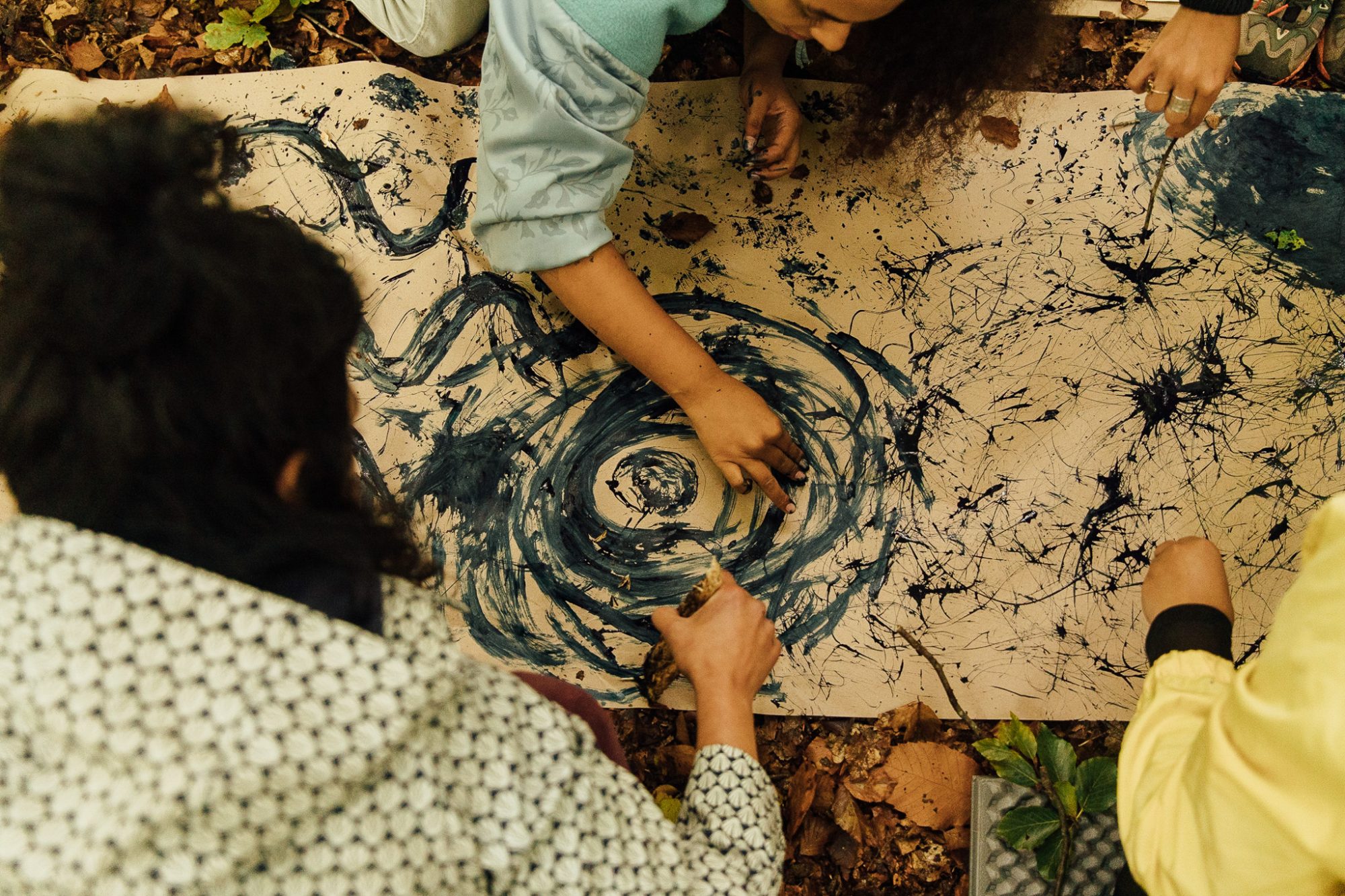
Essentially, the practice comprises a collection of simple, playful and experimental mark-making exercises. It can be done on the fly or through extended sequences in nature. Each one is led by bodily senses, helping to heighten awareness of one’s contact with the natural environment, whether through sound, touch, breath, movement or sight. It is a gentle, creative practice suitable for anyone interested in tuning into the myriad ways in which we are interconnected with the natural world – even those who believe “I can’t draw”.
In the studio, wild drawing continues to be integral to R&D. Not only does the practice inspire and create source material for new collections (see Shadow Dancing below) but, perhaps more importantly, it consistently fortifies the studio’s focus on understanding the self as organic, state-shifting, porous nature.
Get in contact if you would like to book a wild drawing walk for your group or organisation.
Photo credits: Ai Narapol, Ewelina Ruminska, Adam Raja, Martina Colova, Summer Walker
Shadow Dancing
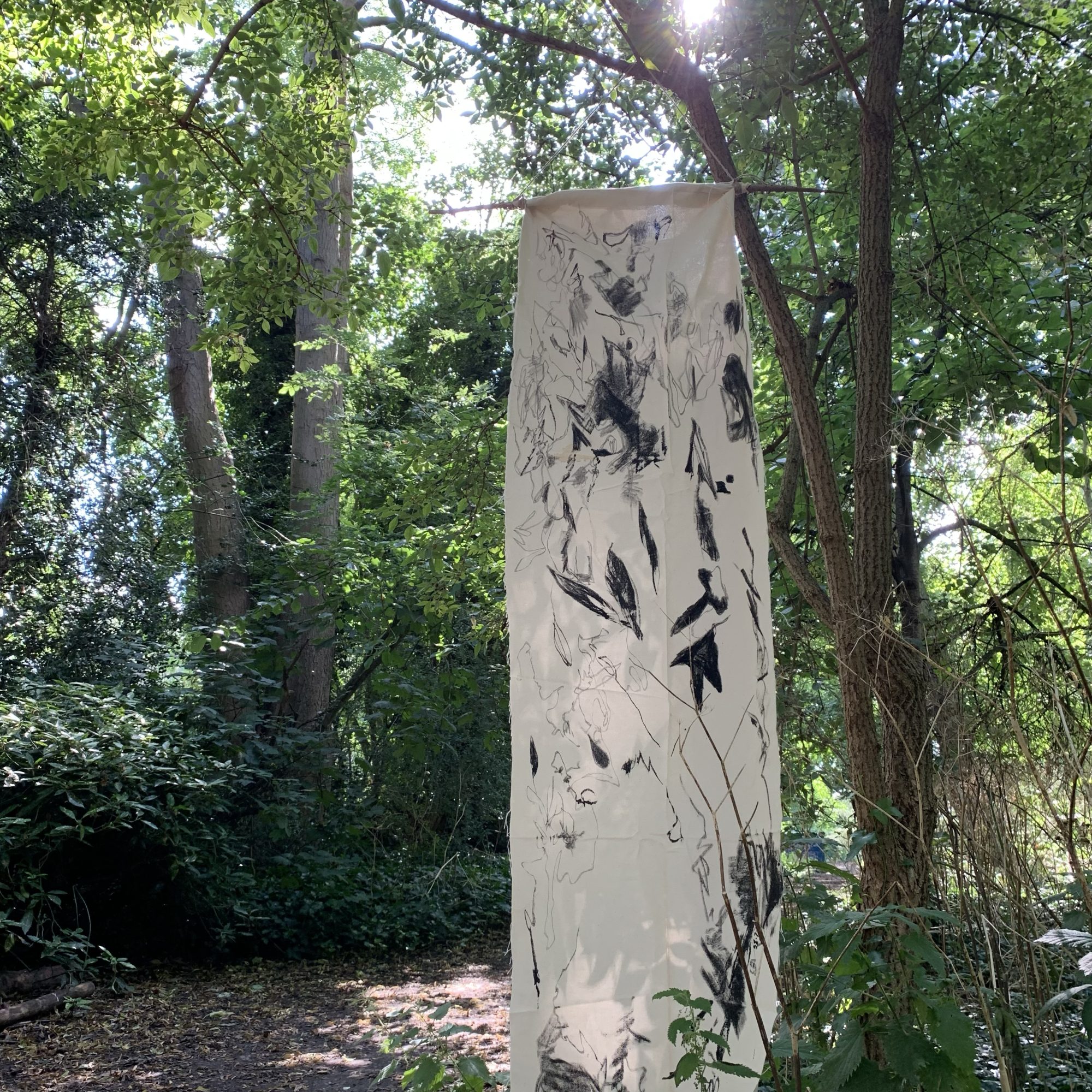
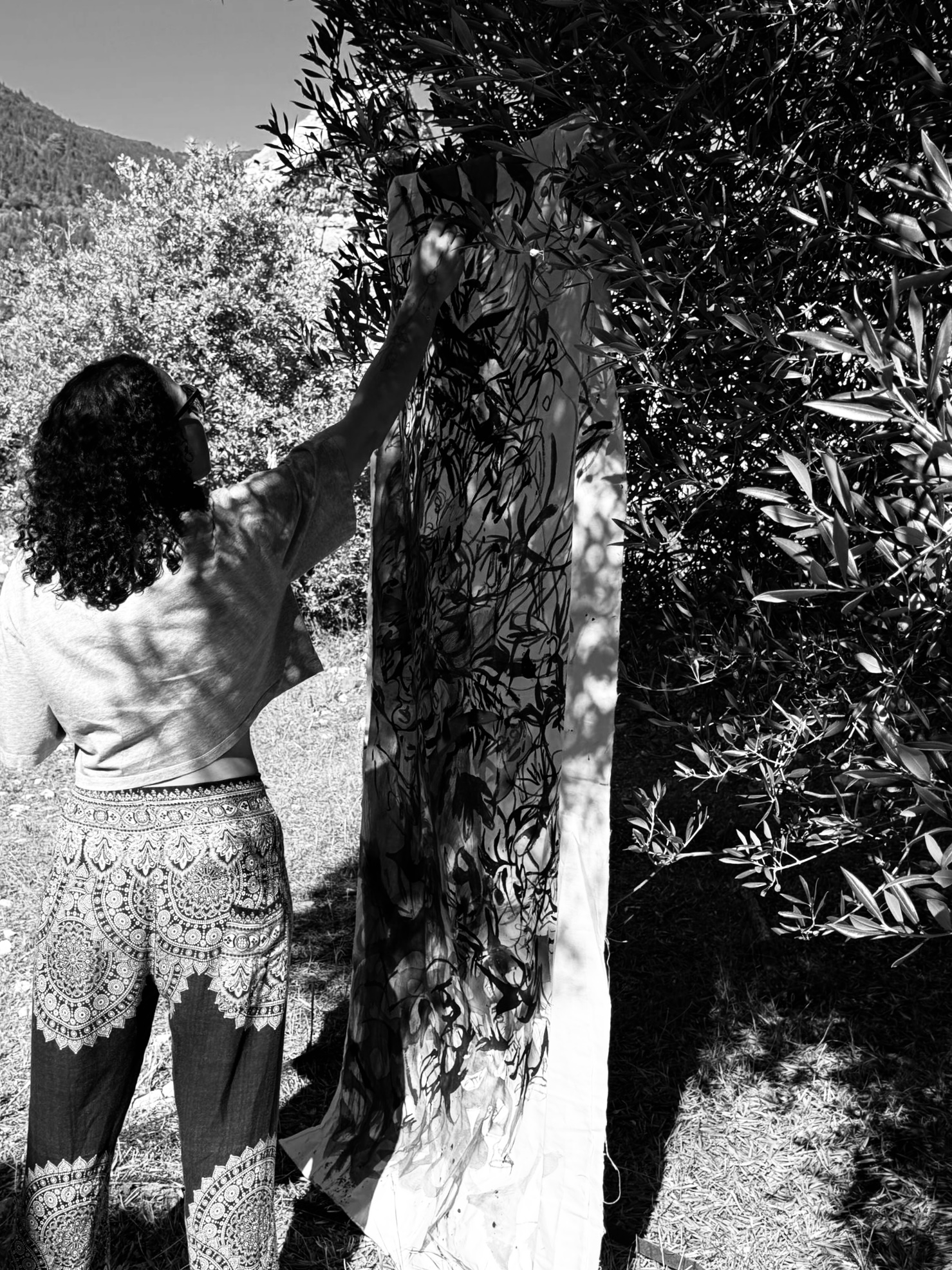
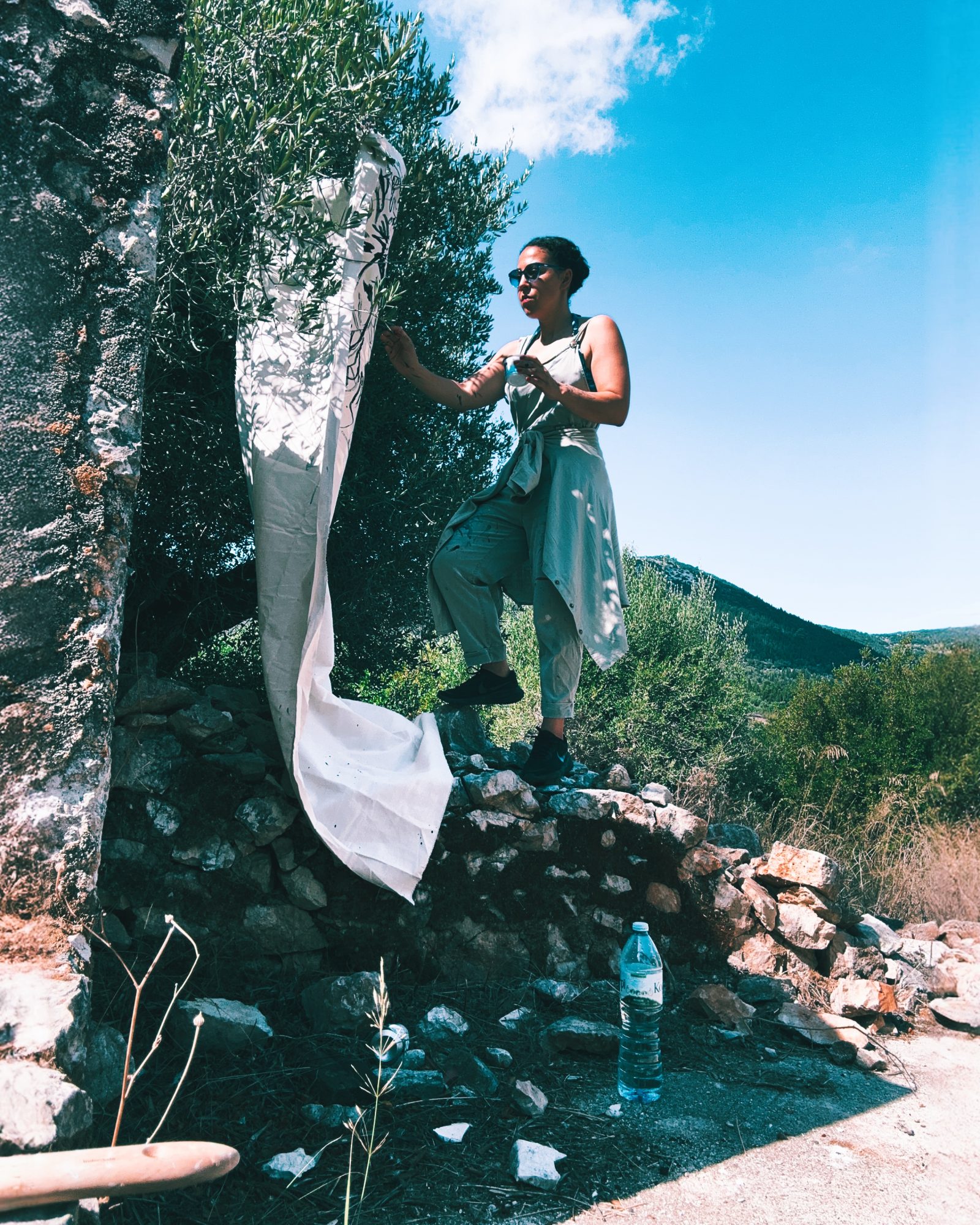
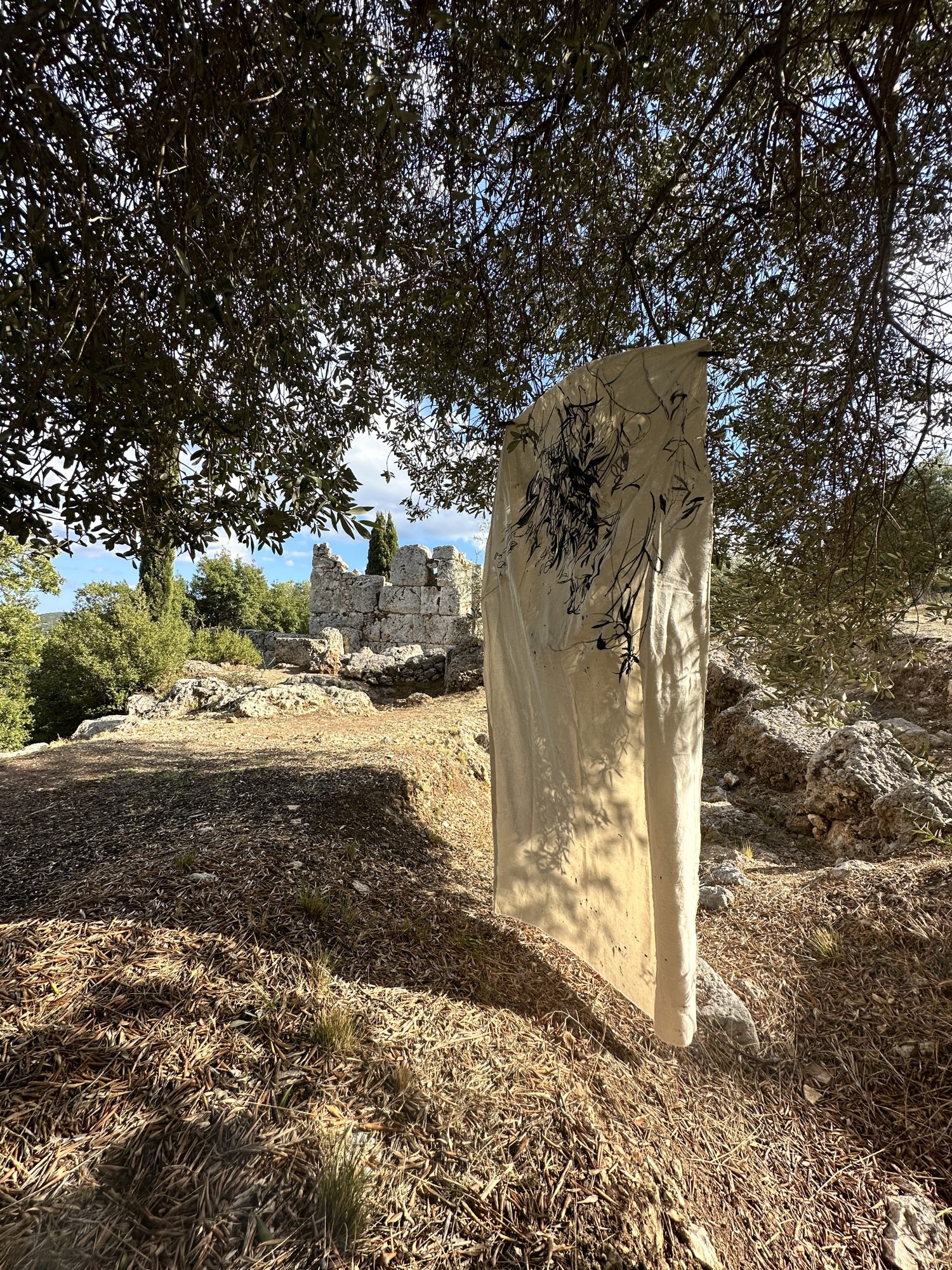
The Shadow Dancing series emerged out of a wild drawing exercise in which raw canvas is stretched across a landscape and inks are used to capture fleeting moments of light and dark. As shadows are cast upon the canvas, a gentle dance emerges of capturing the flickering shapes as the sun and clouds travel overhead, while the breeze shifts their form. The experience is deeply meditative and the outcome always unpredictable. Gradually, these exercises have turned into a growing body of paintings; collections of shadow-shapes recorded within sacred or significant landscapes. They reflect a moment in time and an honouring of that which is present and absent. View recent works created in Ithaca, Greece, here.
Workshop Partners
Asia Society
Corbin’s Local Wildlife
Fences and Frontiers
Global Generation
Grant Museum of Zoology
Imperial College London
Orleans House Gallery
Peaks of Colour
Queens Memory Project
Queens Public Library
Somers Town Living Centre
The Big Draw
The Summit with Patagonia and HF Holidays
University of Liverpool
William Morris Gallery
Wild Drawing
An experimental, embodied, ecocentric practice of noticing our place in nature, as nature.
The purpose of ‘wild drawing’ is not to create aesthetically pleasing or realistic works of art. Instead, the focus is entirely on reconnecting with nature from bodily states of awe, attentiveness and humility. Drawing is just the medium through which this is supported.
The practice has been foundational to studio development since 2020. Developed during the pandemic and evolved through artist residencies, it has been shared through guided walks with community groups and organisations across the UK, in the US, and in Trinidad and Tobago. It is also shared online via the Embodied Ecology Substack and in the book Wild Service: Why Nature Needs You (Bloomsbury 2024, see chapter ‘Belonging’ by Bryony Ella). Read about how wild drawing was integrated into an environmental history research project in New York here.
Essentially, the practice comprises a collection of simple, playful and experimental mark-making exercises. It can be done on the fly or through extended sequences in nature. Each one is led by bodily senses, helping to heighten awareness of one’s contact with the natural environment, whether through sound, touch, breath, movement or sight. It is a gentle, creative practice suitable for anyone interested in tuning into the myriad ways in which we are interconnected with the natural world – even those who believe “I can’t draw”.
In the studio, wild drawing continues to be integral to R&D. Not only does the practice inspire and create source material for new collections (see Shadow Dancing below) but, perhaps more importantly, it consistently fortifies the studio’s focus on understanding the self as organic, state-shifting, porous nature.
Get in contact if you would like to book a wild drawing walk for your group or organisation.
Photo credits: Ai Narapol, Ewelina Ruminska, Adam Raja, Martina Colova, Summer Walker
Shadow Dancing
The Shadow Dancing series emerged out of a wild drawing exercise in which raw canvas is stretched across a landscape and inks are used to capture fleeting moments of light and dark. As shadows are cast upon the canvas, a gentle dance emerges of capturing the flickering shapes as the sun and clouds travel overhead, while the breeze shifts their form. The experience is deeply meditative and the outcome always unpredictable. Gradually, these exercises have turned into a growing body of paintings; collections of shadow-shapes recorded within sacred or significant landscapes. They reflect a moment in time and an honouring of that which is present and absent. View recent works created in Ithaca, Greece, here.
Workshop Partners
Asia Society
Corbin’s Local Wildlife
Fences and Frontiers
Global Generation
Grant Museum of Zoology
Imperial College London
Orleans House Gallery
Peaks of Colour
Queens Memory Project
Queens Public Library
Somers Town Living Centre
The Big Draw
The Summit with Patagonia and HF Holidays
University of Liverpool
William Morris Gallery